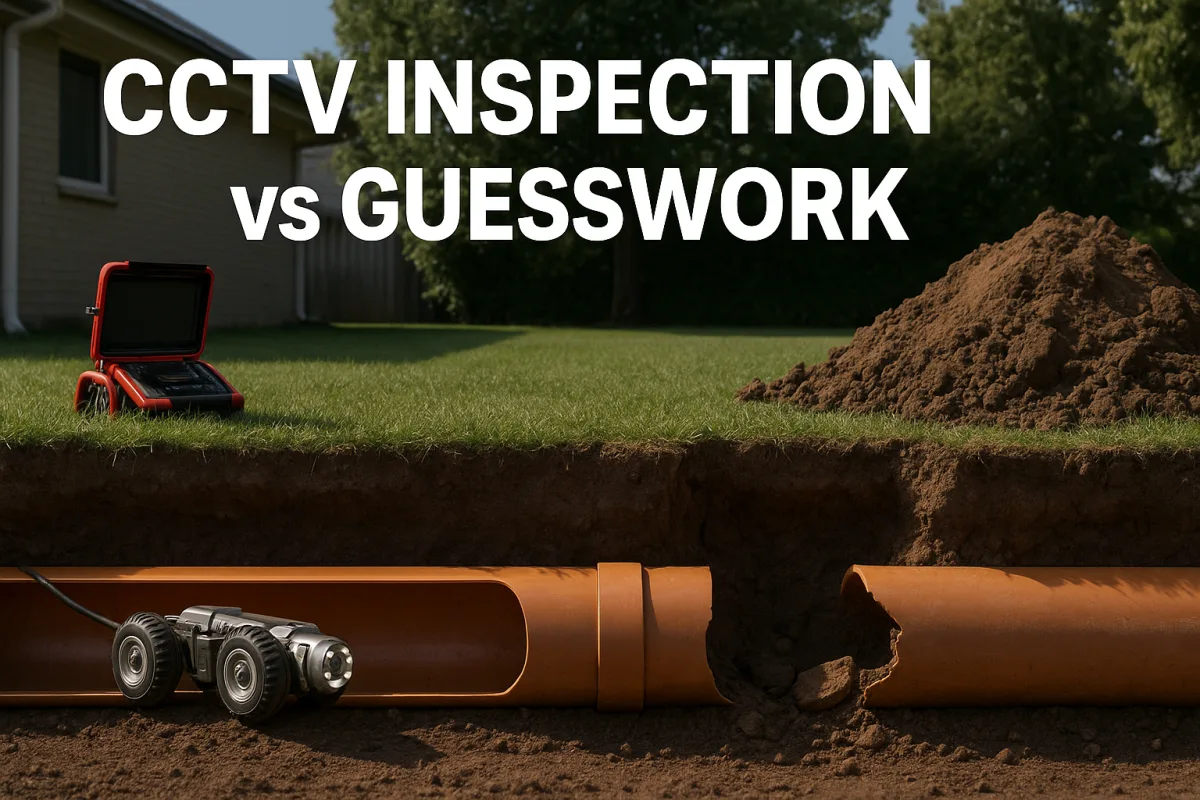
Before drain cameras were common, fixing an underground pipe problem often meant an educated guess followed by a shovel. Sometimes the guess was right; often it meant digging in the wrong place, or clearing a symptom without ever finding the cause. This lesson compares the old approach with modern camera-led diagnosis so you can see why "look first" has become the standard.
How guesswork works
Guesswork relies on symptoms and experience alone. A plumber notes where the blockage backs up, considers the likely pipe route, and either clears the line blindly or excavates where they think the problem is. Skilled tradespeople can make good guesses, but even the best cannot see through soil. The result can be repeated clearing of a recurring fault, or excavation that turns out to be in the wrong spot.
How camera diagnosis works
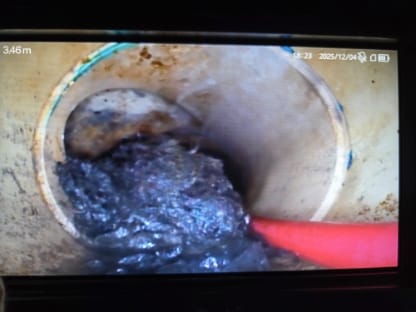
A CCTV inspection replaces assumption with evidence. The camera shows the actual defect, the distance counter shows how far along it is, and the sonde locates it on the surface. Any subsequent repair is then targeted precisely, whether that is a spot dig, relining, or a mechanical root cut. You fix what is actually wrong, where it actually is.
A side-by-side comparison
| Factor | Guesswork | CCTV inspection |
|---|---|---|
| Diagnosis | Based on symptoms and assumption | Based on visual evidence |
| Location accuracy | Approximate | Pinpointed with a sonde |
| Excavation | May dig in the wrong place | Targeted or sometimes avoided entirely |
| Repeat visits | Common if the cause is missed | Reduced by fixing the real cause |
| Record kept | None | Video and images you can keep |
The hidden costs of digging blind
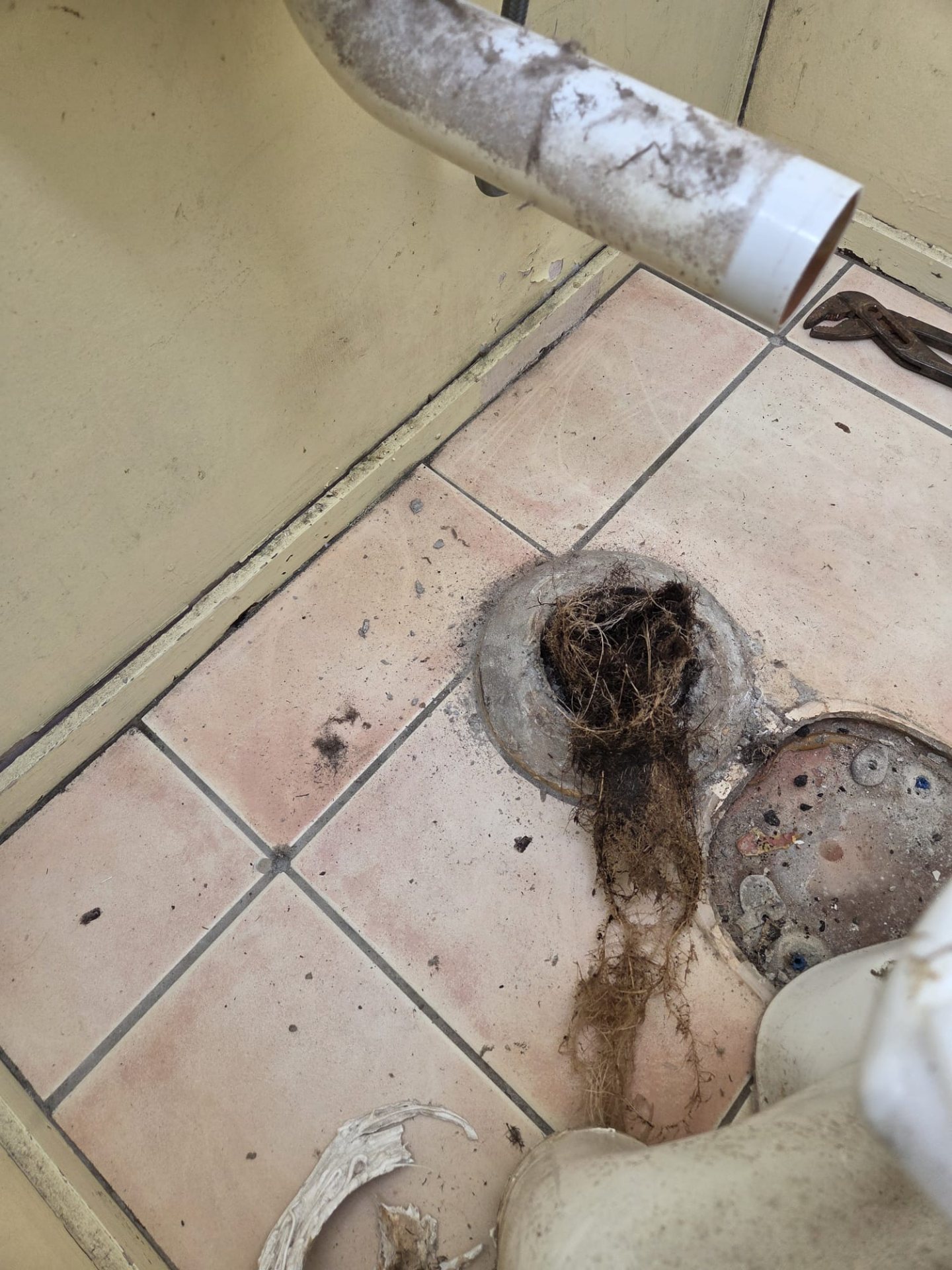
Excavation is disruptive. It can mean lifting paving, disturbing gardens, and restoring the ground afterwards. If the dig misses the fault, all of that cost is wasted and you start again. Repeatedly clearing a blockage that keeps returning is another hidden cost — each visit is cheaper than a dig, but four or five of them can add up to more than a single proper diagnosis and repair would have.
Guesswork is not always wrong, but it is always uncertain. A camera turns uncertainty into a decision you can trust.
When is guesswork still reasonable?
There are moments when clearing first makes sense — for example, an obvious one-off blockage from a known cause, such as an item flushed down a toilet, where the fix is simple and unlikely to recur. But whenever a problem repeats, involves an unknown cause, or precedes an expensive repair, the small cost of looking first almost always pays for itself.
Making the smart choice
The principle is simple: the more a repair will cost or the more often a problem returns, the more valuable it is to see the pipe before acting. To understand exactly what a camera can show you, read what a CCTV inspection reveals. If you are facing a stubborn or repeat drainage issue, you can discuss the best approach through the contact page or view the range of drainage services available.