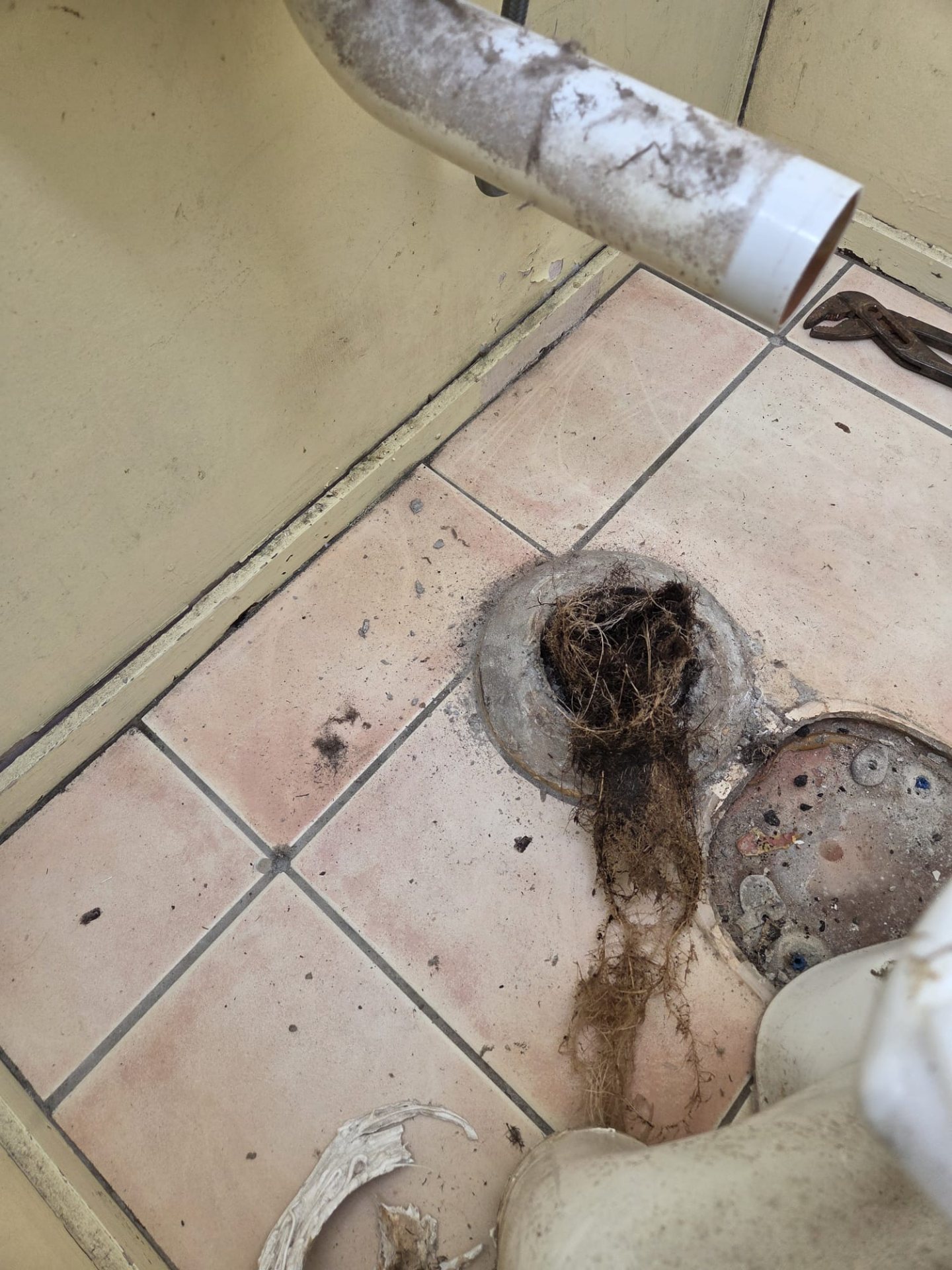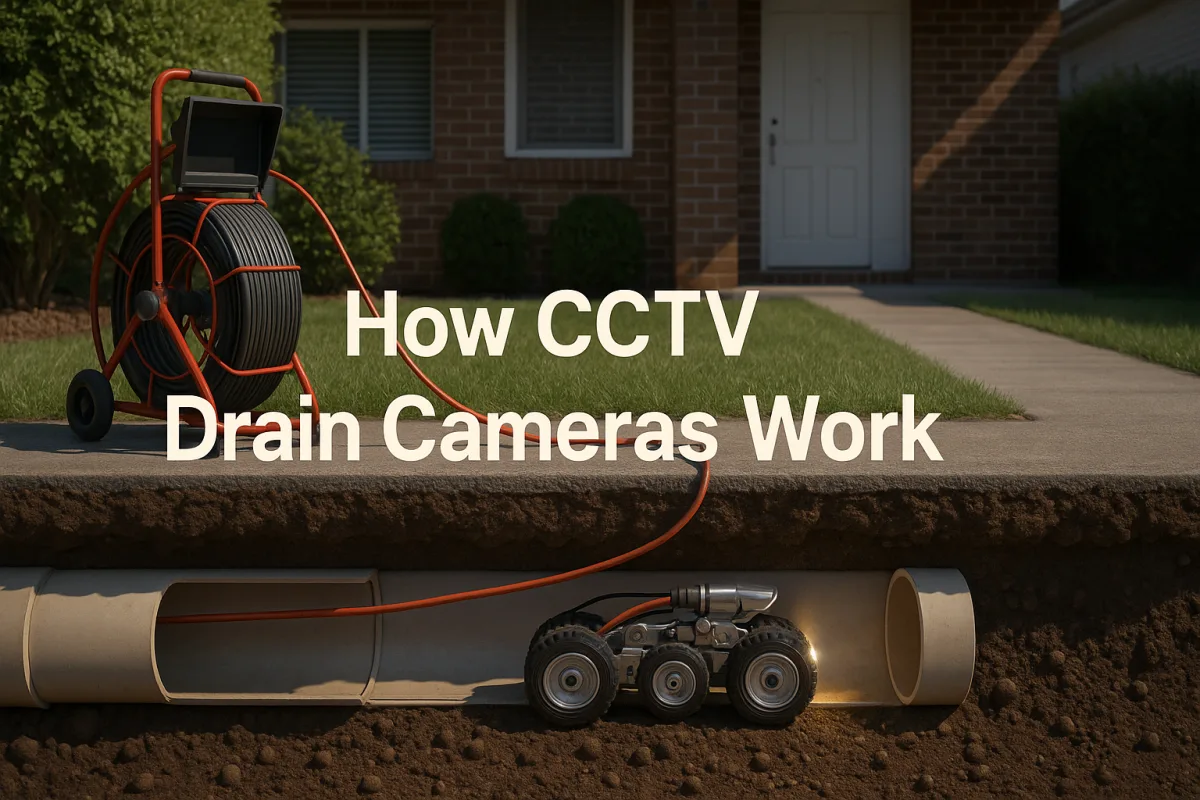
A drain camera looks simple on screen, but a lot of clever engineering goes into producing a clear, steady picture inside a dark, wet, curving pipe. Understanding how the equipment works helps you appreciate what an inspection can — and cannot — see, and why the quality of the gear and operator matters.
The camera head
At the business end is a small, sealed camera head. It has to be waterproof to a significant depth, tough enough to survive scraping along rough pipe walls, and compact enough to negotiate bends. Many heads are self-levelling, meaning the picture stays the right way up even as the camera rolls through a bend, which makes footage far easier to interpret.
Lighting: seeing in the dark
Underground pipes are pitch black, so every camera head carries its own light source, usually a ring of bright LEDs around the lens. Good lighting is what separates a usable inspection from a murky guess. The operator often adjusts brightness as they go: too little light and defects hide in shadow; too much and reflections off wet walls wash out the detail. Clear water or a light flush can also improve visibility by carrying away silt that clouds the view.
Getting the camera down the pipe
There are two main ways to move a camera through a drain:
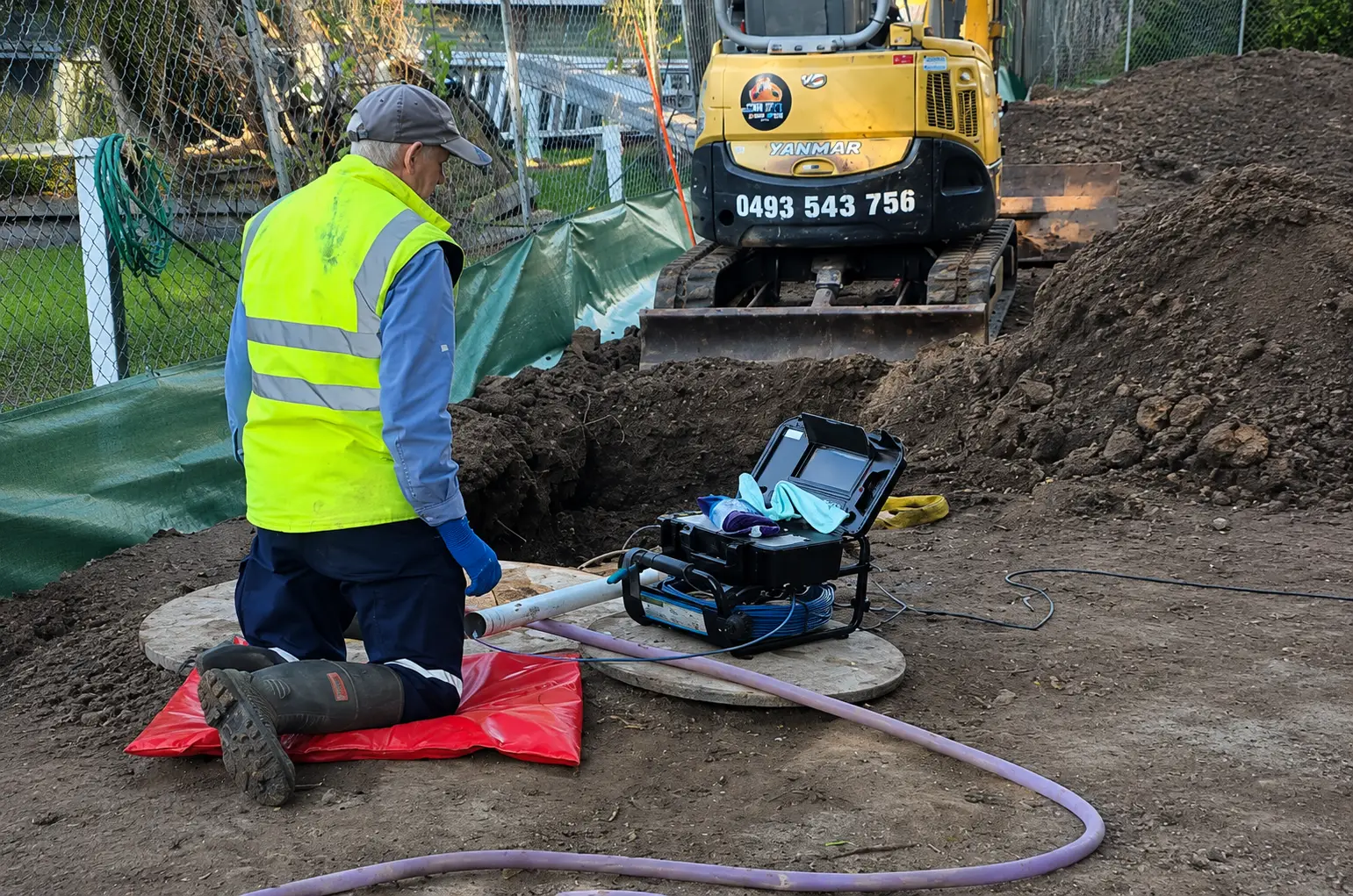
- Push cameras — the camera is mounted on a flexible but springy fibreglass rod coiled on a reel. The operator physically pushes it along, which suits household pipes from around 40 mm up to a few hundred millimetres.
- Crawler units — for large stormwater and sewer mains, a motorised tractor drives the camera along the pipe floor. Crawlers carry powerful lights and pan-and-tilt lenses that can look sideways into junctions.
For most residential Brisbane jobs, a push camera does the work. Crawlers come into play on commercial, council and large-diameter infrastructure.
Knowing where the camera is
A picture of a fault is far more useful when you know exactly where that fault sits. This is where the sonde comes in — a small transmitter built into or near the camera head that emits a locating signal. An operator walking above ground with a handheld locator can trace that signal to mark the position and depth of the camera on the surface. This is the key to planning a dig or repair without opening up metres of ground. You can learn more in locating pipes with sondes.
Recording and measuring
Modern systems do more than show a live feed:
- They record video so you keep a permanent copy of the inspection.
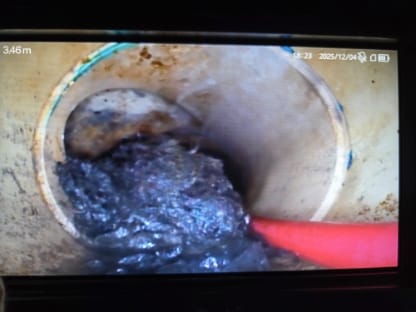
- A distance counter on the reel logs how far the camera has travelled, so a defect can be reported as, for example, "root intrusion at 6.4 metres from the boundary shaft".
- Still images can be captured at each point of interest for the written report.
- Some setups add on-screen text overlays noting the date, site and measurements.
Why operator skill still matters
Even the best camera is only as good as the person driving it. A skilled operator knows how to keep the lens clean, read the pipe's condition, recognise the difference between a harmless stain and a genuine crack, and interpret how water behaves as it flows past. Technology captures the footage; experience turns it into an accurate diagnosis.
Once you understand the hardware, the next step is knowing when to put it to work. See when you need a CCTV inspection, or get in touch through the contact page to discuss your pipes.