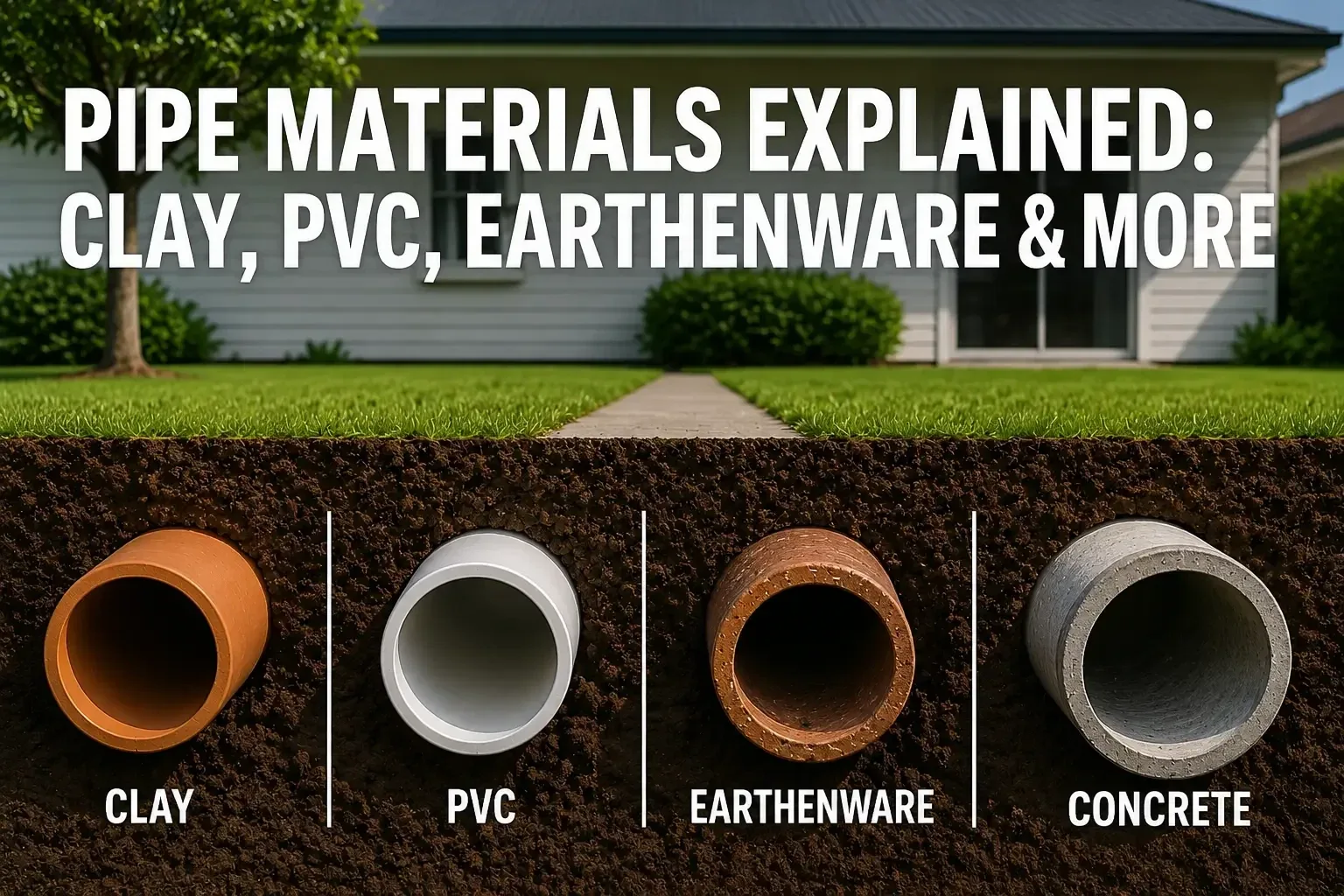
The material a drainage pipe is made from affects how long it lasts, how it fails, and how vulnerable it is to problems like root intrusion. Older Brisbane homes often contain a mix of materials layered up over decades of repairs and extensions. This lesson gives a general, evergreen overview of the common materials — with no prices, since costs vary widely and change over time.
Vitrified clay and earthenware
For much of the twentieth century, sewer and drainage pipes were made from vitrified clay (VC), often referred to as earthenware. Fired at high temperatures, clay is extremely durable and resistant to chemical attack, which is why many original clay drains are still in service today.
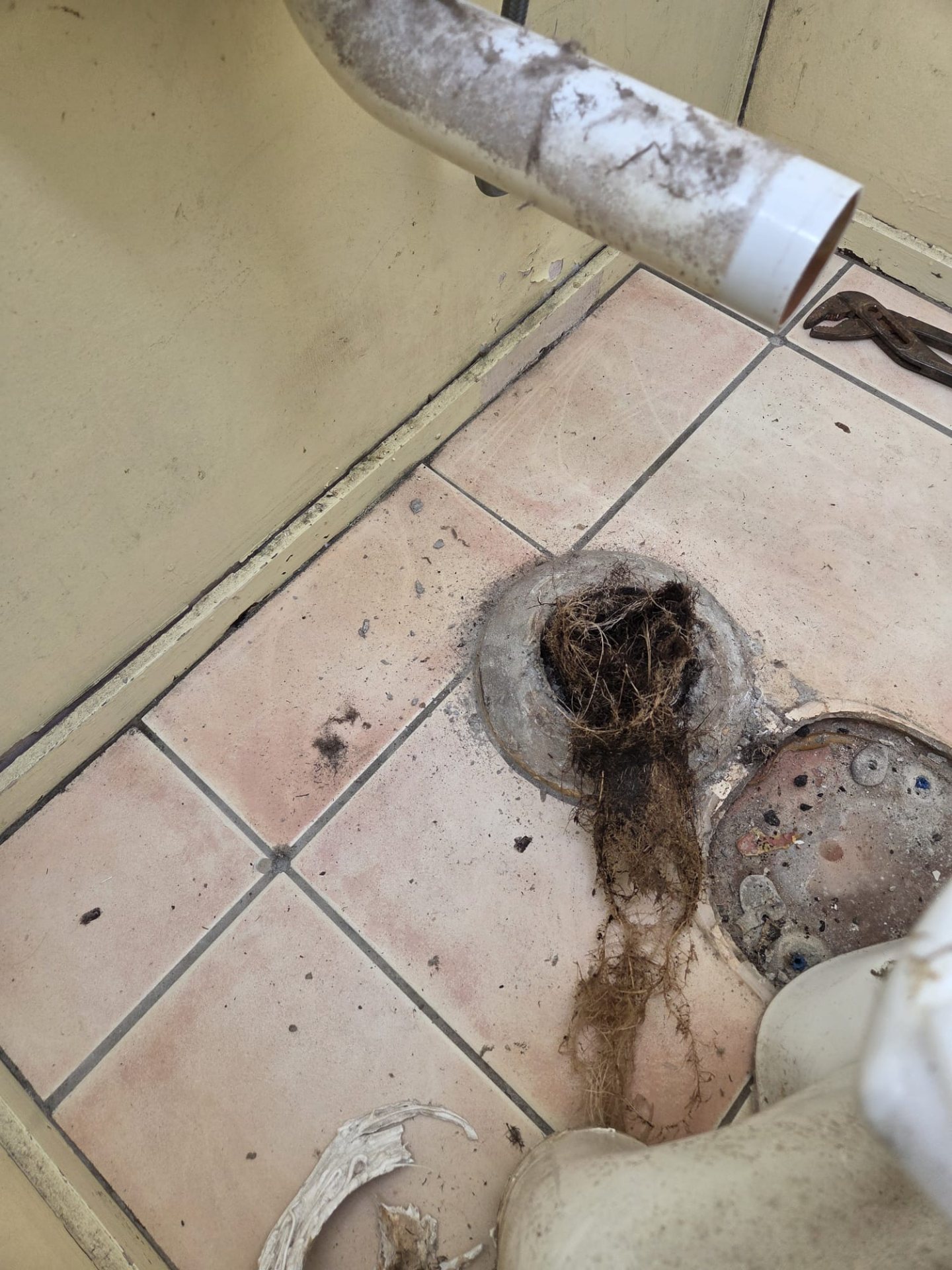
Its weakness is the joints. Clay pipes come in short lengths joined with mortar or rubber seals, and over time those joints can crack, shift with ground movement, or open enough for tree roots to enter. Roots seeking moisture are a leading cause of blockages in older clay drains, particularly in Brisbane's established, tree-lined suburbs.
- Pros: very durable, chemically resistant, long service life.
- Cons: brittle, many joints, prone to root intrusion and cracking with ground movement.
PVC and uPVC
Modern drainage is dominated by PVC (polyvinyl chloride), usually the rigid uPVC form. It is lightweight, smooth-walled, and comes in long lengths with fewer, tightly sealed joints — which makes it far more resistant to root intrusion than jointed clay.
- Pros: lightweight, smooth flow, few joints, resists roots and corrosion, easy to work with.
- Cons: can be damaged by ground movement or poor bedding, and can become brittle with age or UV exposure if left uncovered.
Cast iron
Older homes, especially those with above-ground stacks, may have cast iron waste and vent pipes. Cast iron is strong and quiet in operation, muffling the sound of flowing water. Its enemy is corrosion: over decades the interior can rust and scale, narrowing the bore and eventually perforating the pipe.
- Pros: strong, durable, excellent sound insulation.
- Cons: corrodes internally over time, heavy, scale build-up narrows the pipe.
Concrete
Concrete pipes are common in larger stormwater and sewer applications and in the public network. They are strong and suited to big diameters. In sewer use, concrete can be vulnerable to attack from the acidic gases that form above the flow, which erodes the crown of the pipe over long periods.
- Pros: very strong, ideal for large diameters and heavy loads.
- Cons: heavy, and susceptible to acid gas attack in sewer environments over time.
Copper
You may find copper used for some waste pipes in older or premium installations. It is durable and neat but is more commonly associated with water supply than modern drainage, where PVC has largely taken over for waste lines.
There is no single "best" pipe material — each was the right choice for its era and use. What matters is understanding how the material in your ground behaves as it ages.
A quick comparison
| Material | Typical era/use | Main weakness |
|---|---|---|
| Vitrified clay / earthenware | Older sewer and drainage | Joint cracking and root intrusion |
| PVC / uPVC | Modern sewer and stormwater | Damage from ground movement or poor bedding |
| Cast iron | Older waste and vent stacks | Internal corrosion and scaling |
| Concrete | Large stormwater and sewer mains | Acid gas attack in sewers |
What this means for your property
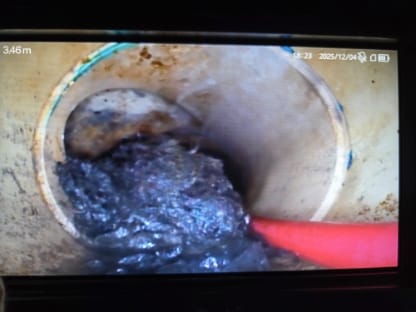
Because materials fail in different ways, knowing what is in your ground helps predict and prevent problems. A home with original clay drains benefits from watching for root intrusion; a cast iron stack may need attention for internal corrosion; and mixed systems — very common in renovated Brisbane homes — can have weak points where old meets new. A camera inspection is the surest way to identify materials and their condition without digging.
If you are unsure what your drains are made of or want their condition assessed, a licensed plumber can inspect and advise. Get in touch through the contact page or explore the available services.