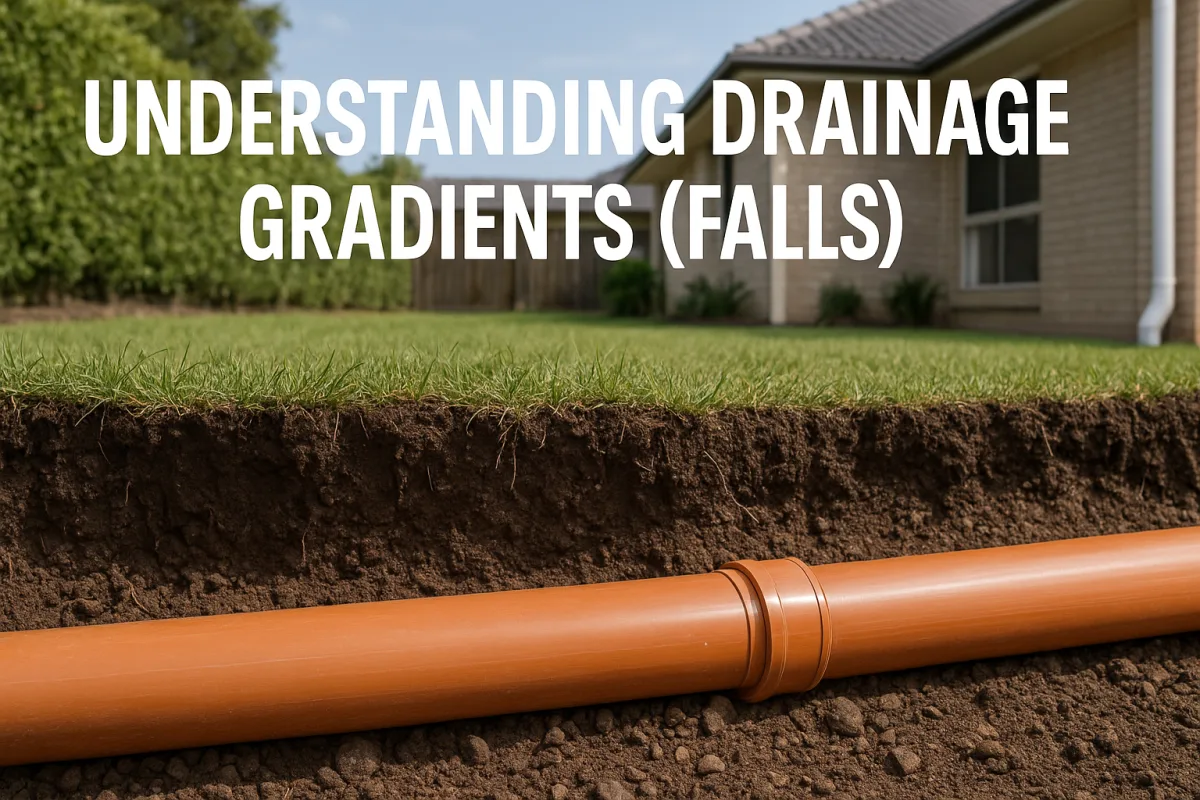
If there is one concept that underpins nearly every gravity drain, it is gradient — also called fall. Fall is simply the downhill slope of a pipe, and getting it right is the difference between a drain that quietly works for decades and one that blocks again and again. This lesson explains how fall is measured and why there is a "just right" range for it.
What gradient means
Gradient is the amount a pipe drops over a given horizontal distance. It is usually written as a ratio such as 1 in 60 or 1 in 100. A fall of 1 in 60 means the pipe drops one metre for every sixty metres it runs — or, more practically for a household drain, about one centimetre for every sixty centimetres. The smaller the second number, the steeper the slope.
Fall is what turns gravity into flow, as explained in how gravity drainage works. Without adequate fall, gravity has nothing to work with and water simply sits.
The Goldilocks principle
Drainage fall has a sweet spot — not too flat, not too steep. This is because a drain must do two things at once: move water and carry solids along with it. The flow needs to be brisk enough to keep solids suspended, but not so fast that the water outruns the solids and leaves them behind.
- Too flat: water crawls, solids settle, and the pipe silts up until it blocks.
- Too steep: water can race away and strand solids, and in some layouts it may even siphon trap seals.
- Just right: a self-cleansing flow that carries everything away together and scours the pipe as it goes.
Good fall is a balancing act: fast enough to carry solids, gentle enough not to leave them behind. That balance is why gradients are specified, not guessed.
Who decides the correct fall?
The appropriate gradient for a given pipe size and use is set out in plumbing standards and regulations, and determining it is work for a licensed plumber. Larger pipes generally tolerate a gentler fall than smaller ones, and different applications have different requirements. The key point for a homeowner is that fall is not arbitrary — there is a correct range for every drain, and it exists for good engineering reasons.
How good gradients go bad
A drain can be laid at a perfect fall and still develop problems later, because the ground it sits in does not stay still. Common culprits include:
- Ground movement: Brisbane's reactive clay soils swell when wet and shrink when dry, which over years can lift or drop sections of pipe.
- Poor bedding: if a pipe was not supported evenly when laid, it can settle unevenly over time.
- Sags or "bellies": a section that drops below its intended line creates a low point where water and debris pool, causing recurring blockages.
- Tree roots and disturbance: roots and nearby excavation can shift pipes out of alignment.
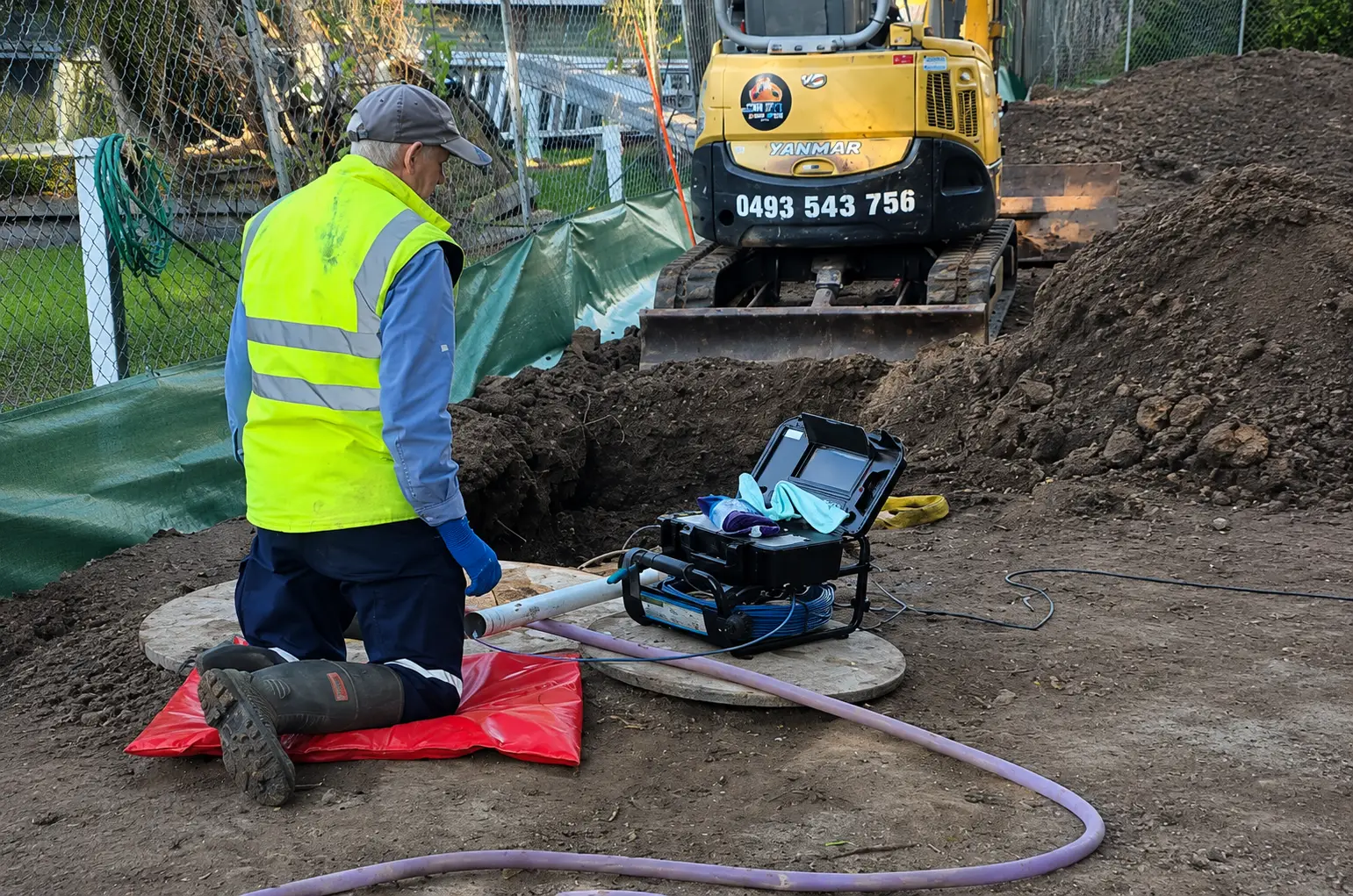
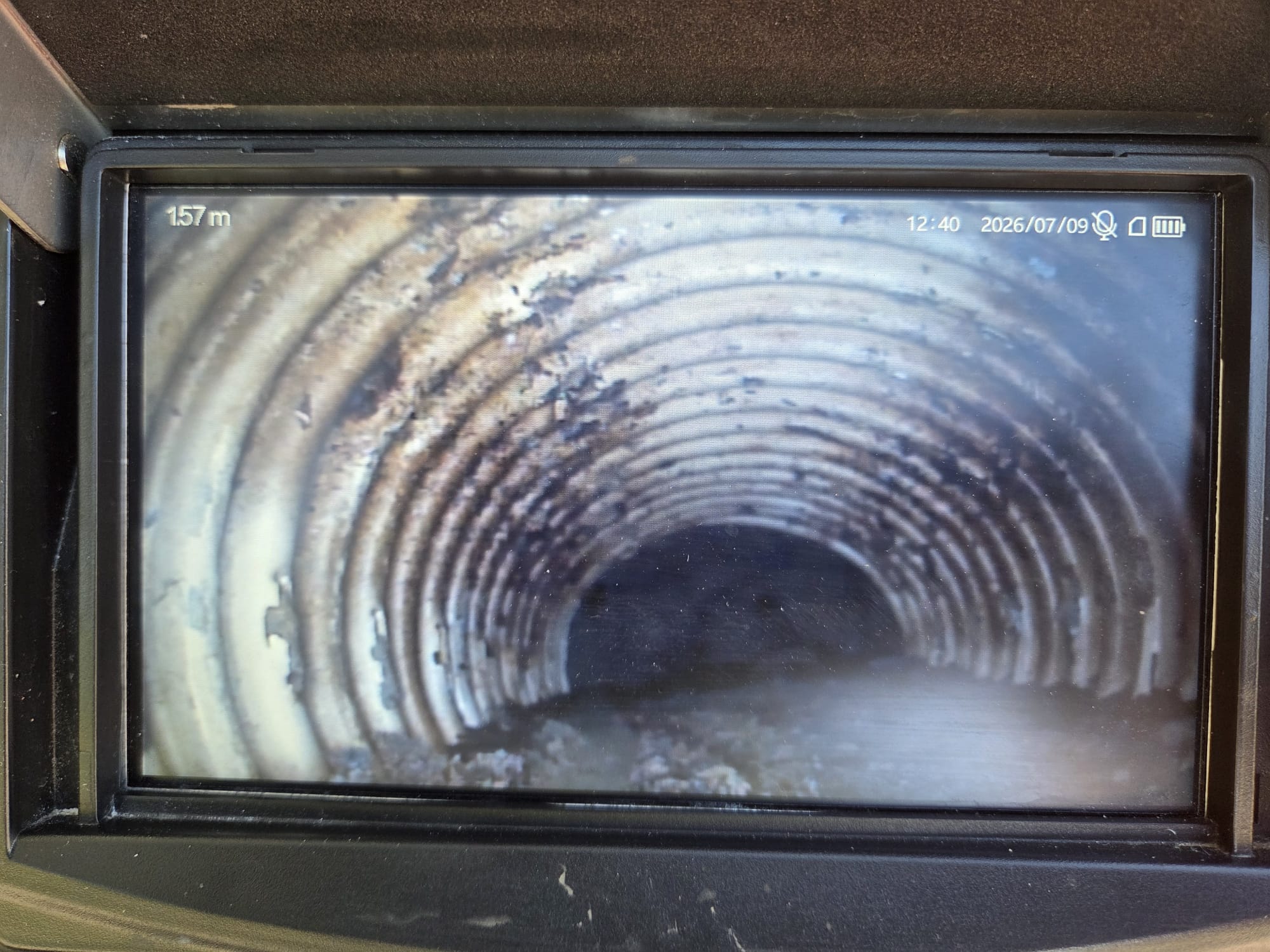
A sag is particularly troublesome because the surrounding pipe may be perfectly fine — the problem is purely the lost gradient at one spot. This is exactly the kind of fault a camera inspection is good at revealing.
Signs your fall may be wrong
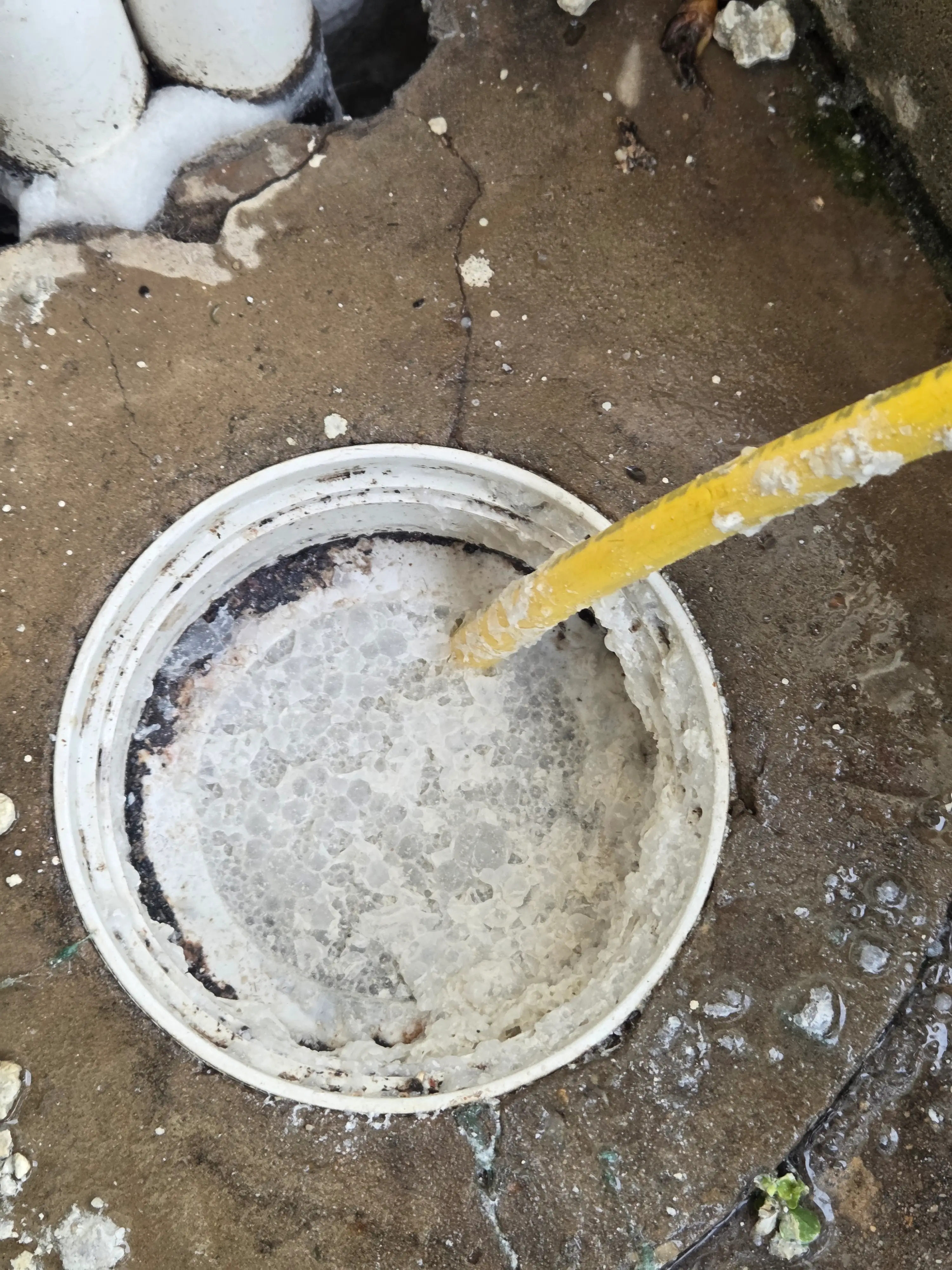
You cannot see gradient directly, but symptoms hint at it: a drain that blocks repeatedly in the same place, gurgling that persists after clearing, slow drainage that returns quickly, or standing water visible in an inspection chamber. These point to a section that is no longer draining freely, often because it has lost its fall.
The takeaway
Gradient is the quiet foundation of good drainage. When a drain keeps blocking despite being cleared, the cause is frequently a fall that is too flat, too steep, or disturbed by ground movement — not simply "bad luck". Understanding this helps you ask the right questions and recognise when a repair, rather than another clean-out, is the real solution.
If a drain on your property blocks repeatedly, a licensed plumber can check the fall, often using a camera to find a sag or flat section. To discuss the problem, reach out through the contact page or explore the available services.