Most of us only think about drains when something goes wrong — a slow sink, a gurgling toilet or a smell that will not shift. Yet a well-designed drainage system quietly moves thousands of litres of water and waste away from your home every week without a single moving part. Understanding the basics helps you spot small problems early, describe them clearly to a plumber, and avoid habits that cause blockages.
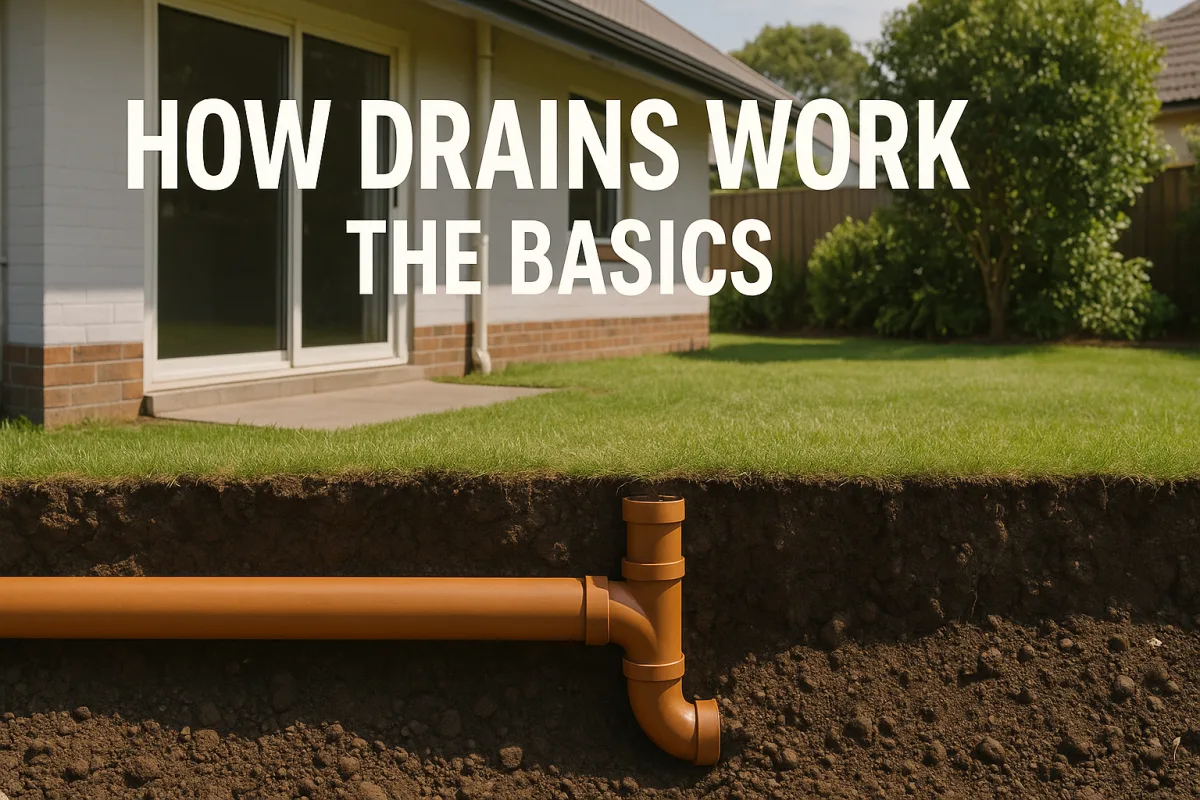
At its heart, drainage is simple: dirty water needs to leave your home, and clean rainwater needs to be carried away from your roof and yard. The system that does this relies almost entirely on gravity, a handful of clever fittings, and a network of pipes that all slope gently downhill towards a larger main.
The journey of a drop of water
When you empty a sink, the water follows a predictable path. Knowing that path makes the whole system easier to picture:
- The fixture — your basin, bath, shower, toilet or laundry tub is where water enters the drainage system.
- The trap — a curved section of pipe just below the fixture holds a small plug of water that blocks sewer gases from rising back into the room.
- The branch drain — a smaller pipe that carries waste from one or more fixtures towards the main drain.
- The main drain — the larger pipe that collects everything and carries it to the boundary.
- The sewer or stormwater network — beyond your property, the flow joins the public system managed by the water authority or council.
Why gravity does the heavy lifting
Unlike your water supply, which arrives under pressure, most drainage works with no pressure at all. Pipes are laid at a carefully chosen slope, or fall, so that water runs downhill at a sensible speed. Too little fall and waste moves sluggishly and leaves solids behind; too much fall and the water can race away, leaving solids stranded. Getting this balance right is one of the most important parts of drainage design, which we cover in understanding drainage gradients.
A drain is not just a hole in the ground — it is a carefully sloped path that uses gravity to carry both water and solids away together.
The two hidden helpers: traps and vents
Two features work behind the scenes to keep a drainage system pleasant and reliable. The first is the trap, the U-shaped bend under every fixture that keeps a seal of water in place. Without it, smells from the sewer would drift straight into your home. You can read more in what is a drain trap.
The second is the vent, a pipe that runs up through the roof to let air into the system. Vents stop the vacuum that would otherwise suck the water out of your traps as waste rushes past. Together, traps and vents keep the system both airtight against odours and free-flowing.
Stormwater and sewer: two separate systems
In Brisbane, as across most of Australia, rainwater and wastewater are kept apart. Rain from your roof and yard flows into the stormwater system, which discharges to creeks, rivers and the bay. Everything from your toilets, sinks and laundry flows into the sewer, which is treated before release. Mixing the two is not allowed, and doing so can overload treatment plants or pollute waterways. We explain the distinction in stormwater vs sewer drains.
What Brisbane conditions mean for your drains
Local climate and geology shape how drains behave here. A few factors stand out:
- Heavy summer storms can dump enormous volumes of rain in minutes, testing the capacity of stormwater drains and gutters.
- Reactive clay soils swell and shrink with moisture, which can shift and crack older pipes over time.
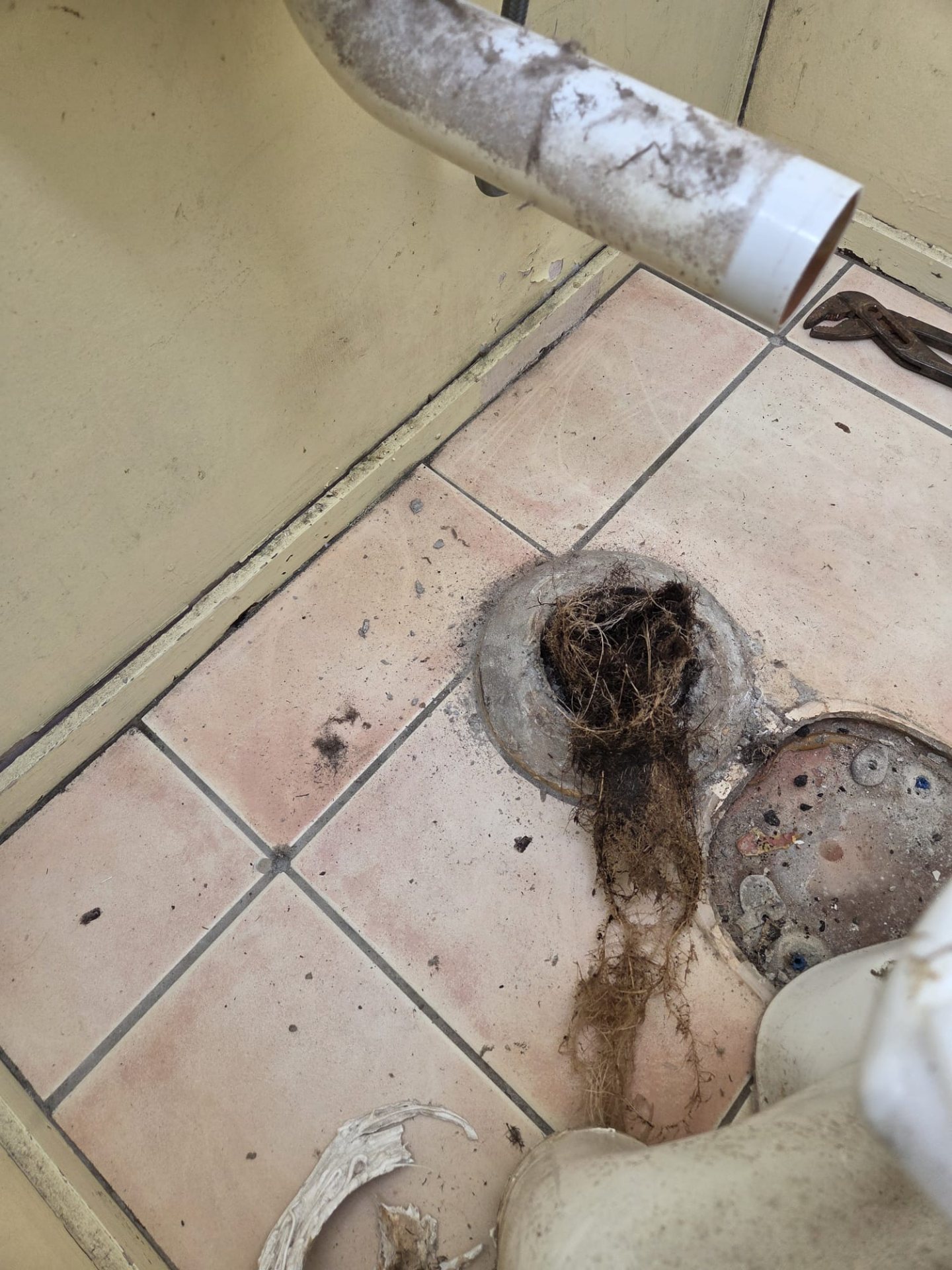
- Mature trees send roots towards the moisture and nutrients inside drains, a leading cause of blockages in established suburbs.
None of these are cause for alarm, but they explain why regular attention pays off in this part of the country.
Putting it all together
A drain works because every part plays its role: fixtures feed waste into traps, traps block odours, branch drains gather the flow, vents balance the air, and gravity carries everything downhill to the right network. When one element fails — a blocked vent, a lost trap seal or a sagging pipe — the symptoms often show up somewhere else entirely, which is why diagnosis matters more than guesswork.
If your drains are behaving strangely and you would like a professional opinion, you can talk it through with a licensed plumber via the contact page, or browse the range of drainage services available.