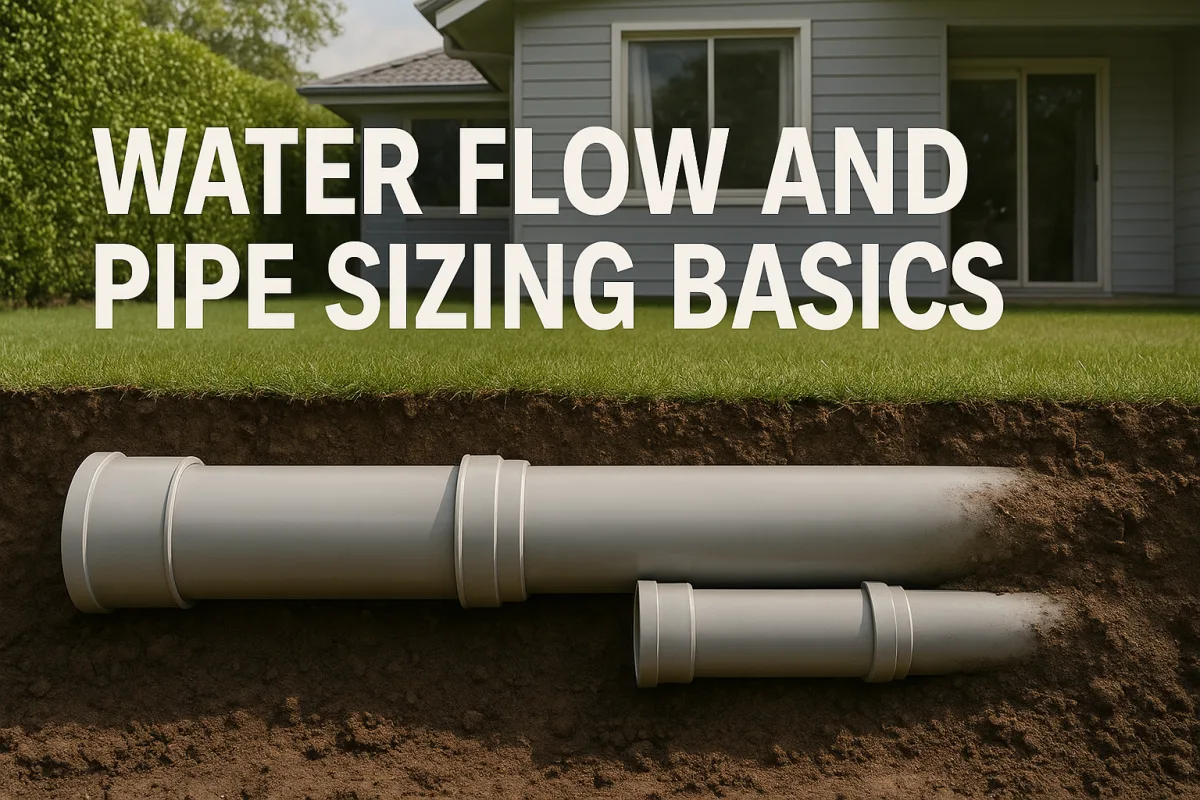
Ever wondered why a sewer pipe is wider than a basin waste, or why a stormwater line for a big roof is larger than one for a small shed? The answer lies in the relationship between water flow, pipe size and fall. Get these right and a drain works reliably for decades; get them wrong and you invite blockages, pooling and overflows. This lesson explains the fundamentals in plain terms.
You do not need to design drainage yourself — that is a job for qualified professionals working to the relevant standards — but understanding the principles helps you make sense of advice and spot when something is off.
How water moves through a drain
Most household drainage works by gravity. Pipes are laid on a gentle downhill slope, and water flows because it is always seeking the lowest point. Unlike your pressurised water supply, drains are not usually forced along — they rely on that steady fall to keep everything moving.
For solids and waste to be carried along, the flow needs enough speed and volume. If the water moves too slowly, solids settle out and build up; if a pipe is starved of flow, debris is left behind. This is why both slope and size matter together, not in isolation.
Why fall matters
Fall is the slope of a pipe — how much it drops over its length. It is one of the most important factors in drainage, and it has a sweet spot:
- Too little fall — water moves sluggishly, solids settle, and blockages form.
- Too much fall — water can race ahead and leave solids stranded, which also causes build-up.
- The right fall — water and waste travel together at a self-cleaning speed.
A common misconception is that steeper is always better. In drainage, a consistent, correct fall beats an aggressive one — the goal is a flow that carries solids, not one that outruns them.
This is why a pipe with a belly or backfall causes trouble: the fall becomes wrong in that section, and waste pools or flows the wrong way.
How pipe size relates to capacity
Pipe diameter determines how much water a line can carry. Larger pipes handle greater volumes, which is why different parts of a system use different sizes:
| Application | Why the size suits it |
|---|---|
| Basin or sink waste | Small flow from a single fixture needs only a narrow pipe |
| Toilet branch | Larger diameter to carry solids without clogging |
| House drain | Bigger again, as it combines flows from many fixtures |
| Sewer main | Large, because it serves many properties at once |
| Stormwater for a big roof | Sized to handle peak storm runoff volumes |
Sizing is not guesswork. Professionals calculate expected flows and choose pipe diameters and falls to suit, following recognised standards. The aim is a pipe large enough for peak demand but not so oversized that flow becomes too shallow to self-clean.
When sizing or fall goes wrong
Poor sizing and incorrect falls show up as recurring, frustrating problems:
- Undersized pipes overflow or surcharge when demand peaks, such as during a storm.
- Oversized pipes can run too shallow, letting solids settle and build up.
- Insufficient fall leads to sluggish drainage and repeated blockages.
- Excessive or uneven fall strands solids and creates trouble spots.
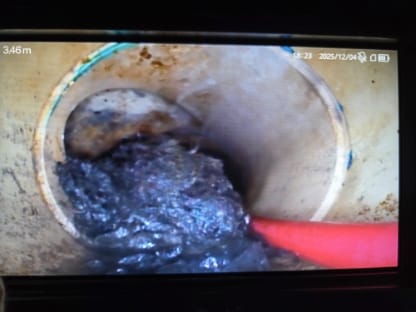
Many chronic drainage complaints trace back to one of these fundamentals rather than a simple one-off blockage. A camera inspection can reveal a belly or wrong fall that no amount of clearing will permanently fix — see the CCTV Drain Inspections series.
Why this matters for homeowners
Understanding flow, fall and size helps you interpret advice about your drains. If a plumber explains that a drain keeps blocking because of poor fall, or that a stormwater line is undersized for your roof, you now understand why a proper fix may involve more than clearing the blockage. That knowledge helps you invest in a lasting solution rather than a temporary one.
If you suspect a sizing or fall problem behind recurring drainage issues, a licensed plumber can assess and advise. Reach DrainSpy Brisbane through the contact page to discuss your situation.