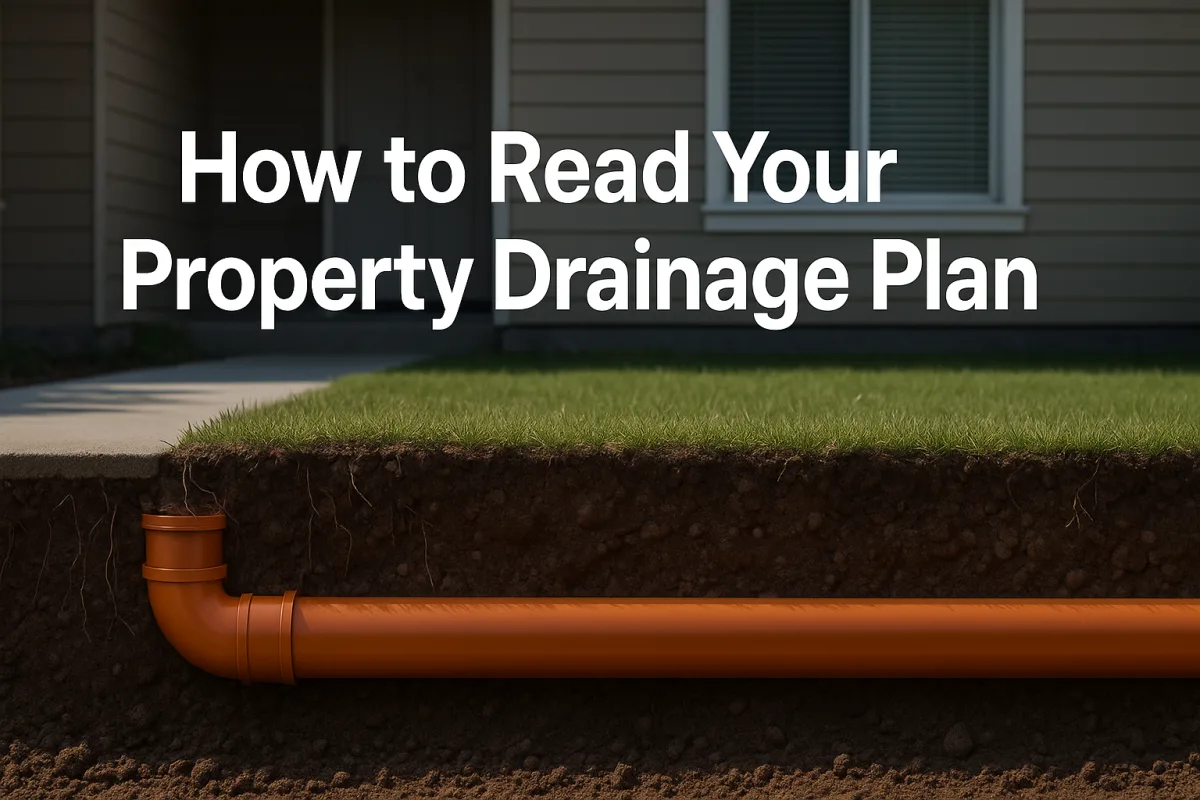
A property drainage plan is essentially a map of the pipes hidden beneath and around your home. It shows where the sewer and stormwater lines run, where fixtures connect, and where the pipes leave your property. For homeowners, learning to read one turns an intimidating technical drawing into a genuinely useful tool — especially before you dig, build or renovate.
You do not need to be a draftsperson to get value from a drainage plan. With a little orientation, the symbols and lines start to tell a clear story about how your property drains.
What a drainage plan is for
Drainage plans are created when a property is built or when drainage work is carried out. They record what was installed so that anyone working on the site later — a plumber, a builder, or you — can understand the layout without guessing. A good plan helps you:
- Avoid striking a pipe when digging for footings, pools, fences or landscaping
- Locate the sewer connection point and inspection openings
- Understand where fixtures drain and how the falls run
- Plan renovations that add or move plumbing fixtures
Getting your bearings
Start by orienting the plan to the real world. Find the property boundaries, the outline of the house, and a reference like the street frontage. Most plans include a north arrow and a scale. Once you know which way is which, you can match the lines on paper to the layout you walk through every day.
Look next for the point where drainage leaves the property — usually the sewer connection near a boundary — because everything on your side flows toward it.
Common symbols and abbreviations
Drainage plans use a shorthand of lines and letters. While conventions vary between drafters and eras, some symbols appear again and again:
| Symbol / label | Typical meaning |
|---|---|
| IO | Inspection opening — an access point for clearing the drain |
| IP | Inspection point / pit |
| ORG | Overflow relief gully — releases pressure outside if the drain surcharges |
| FW / S | Foul water / sewer line |
| SW | Stormwater line |
| WC | Water closet (toilet) |
| FW gully / GT | Gully trap — an external drain for waste water |
| DP | Downpipe from the roof |
Different line styles usually separate the systems — one style for sewer, another for stormwater — so you can follow each network independently. A legend on the plan should confirm what each line and symbol means; always read it, because conventions are not universal.
Tracing the lines
With the symbols in mind, trace each system from the fixtures outward:
- Start at a fixture, such as a toilet or basin, marked with its symbol.
- Follow the sewer line from that fixture as it joins with others.
- Note the inspection openings and gully traps along the way.
- Follow the combined line to the connection point where it leaves the property.
- Repeat for the stormwater system, which runs separately from downpipes and surface drains out to its own discharge point.
Remember the golden rule: sewer and stormwater are two separate systems. On the plan they should never share the same pipe — if they appear to, look again at the legend.
Using the plan in real life
A drainage plan earns its keep during renovations and repairs. Before excavating, use the plan to estimate where pipes run so you can dig carefully or arrange a locate. When adding a bathroom or moving a kitchen, the plan shows where existing lines are and how new fixtures might connect. When a blockage strikes, it helps a plumber find the nearest inspection opening quickly.
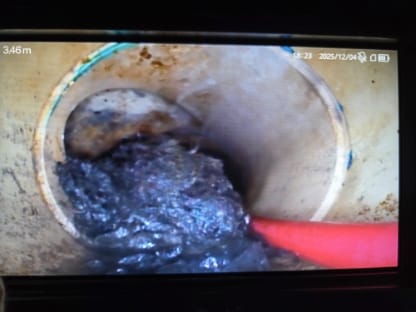
Bear in mind that plans are a guide, not gospel. Pipes may have been added, altered or laid slightly differently from the drawing over the years. For anything critical, a physical locate or a CCTV inspection confirms the real position before you dig.
If you do not have a plan
Not every property owner has a copy of their drainage plan. Records may be held by the local council or water utility, and older properties may have limited documentation. Where no reliable plan exists, a licensed plumber can survey the site and locate the drains directly.
If you would like help interpreting a drainage plan or locating pipes before a project, DrainSpy Brisbane can assist — reach out through the contact page to discuss your property.