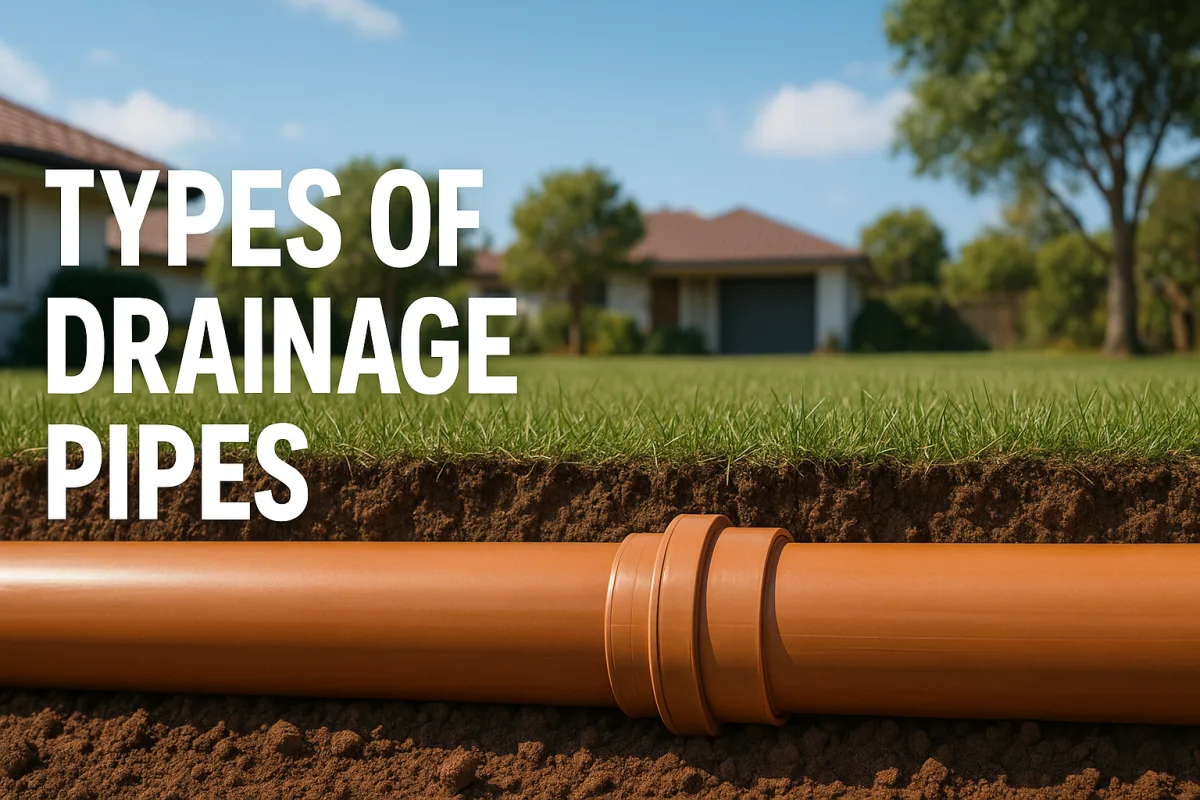
When people say "drainage pipe" they are often picturing a single grey PVC tube. In reality, a property may contain several different types of pipe, each designed for a specific job. This lesson classifies drainage pipes by purpose — what they carry and where — rather than by material, which is covered separately in pipe materials explained.
Sewer drainage pipes
Sewer pipes carry wastewater from your fixtures to the public sewer or on-site system. They are designed to be sealed and self-cleansing, meaning the flow is fast enough to carry solids along without leaving them behind. Sewer lines rely on traps and vents to remain odour-free, and they are laid at a carefully controlled fall so waste keeps moving. Household sewer branch drains are commonly around 100 mm in diameter, with smaller branches serving individual fixtures.
Stormwater pipes
Stormwater pipes handle rainwater from roofs, paving and yards. Because they can face sudden, heavy flows during a storm, they are often sized generously and arranged to shed water quickly to a legal discharge point. Downpipe connections, yard drains and channel drains all feed into the stormwater network. In Brisbane's storm-prone climate, adequate stormwater capacity is especially important. The distinction between these and sewer lines is explained in stormwater vs sewer drains.
Subsoil (agricultural) drains
Not all drainage carries water that arrives at a fixture or downpipe. Subsoil drains, sometimes called ag-drains or aggie pipe, are perforated or slotted pipes buried in gravel to collect water from the surrounding soil. They lower the water table around foundations, retaining walls and gardens, protecting structures from moisture and reducing soggy ground. In Brisbane's reactive clay soils, subsoil drainage can help manage the moisture swings that stress buildings.
The right pipe for the job is not just about size — it is about matching the pipe to the flow it will carry, from steady sewage to sudden storm surges to slow-seeping groundwater.
Specialised and connecting pipes
Beyond the three main categories, several other pipe types appear around a property:
- Vent pipes — carry air rather than water, keeping the sewer system balanced (see understanding drain vents).
- Downpipes — vertical pipes that carry roof water from gutters to the stormwater system.
- Charged (or wet) stormwater lines — pipes that run full of water under pressure to move stormwater uphill to a discharge point, used where gravity alone will not work.
- Pressure sewer pipes — smaller pipes used with a pump where a gravity connection is not possible.
Sizing and fall
Every drainage pipe has a diameter and a fall suited to its role. Larger pipes carry more flow but need more room and careful support; steeper falls move water faster but can leave solids behind if overdone. Getting the balance right is central to good drainage, a topic explored in understanding drainage gradients and how gravity drainage works. The correct sizes and gradients are set by plumbing standards and should be determined by a licensed plumber.
Why using the right pipe matters
Using the wrong pipe for a job leads to trouble. A stormwater pipe pressed into service for sewage may not be sealed or vented correctly; an undersized stormwater line will surcharge in a downpour; and skipping subsoil drainage where it is needed can leave foundations sitting in wet ground. Matching pipe type, size and fall to the task keeps a property dry and its drains reliable.
If you are planning drainage work, adding subsoil drains, or upgrading stormwater capacity before storm season, a licensed plumber can specify the right pipes for your site. Start a conversation via the contact page or explore the available services.