Somewhere in most yards is a round or square lid set into the ground — easy to overlook until a drain blocks. That lid usually covers an inspection chamber, a purpose-built access point into the drainage network below. Far from being a nuisance, it is one of the most useful features of a well-designed drainage system.
What an inspection chamber is
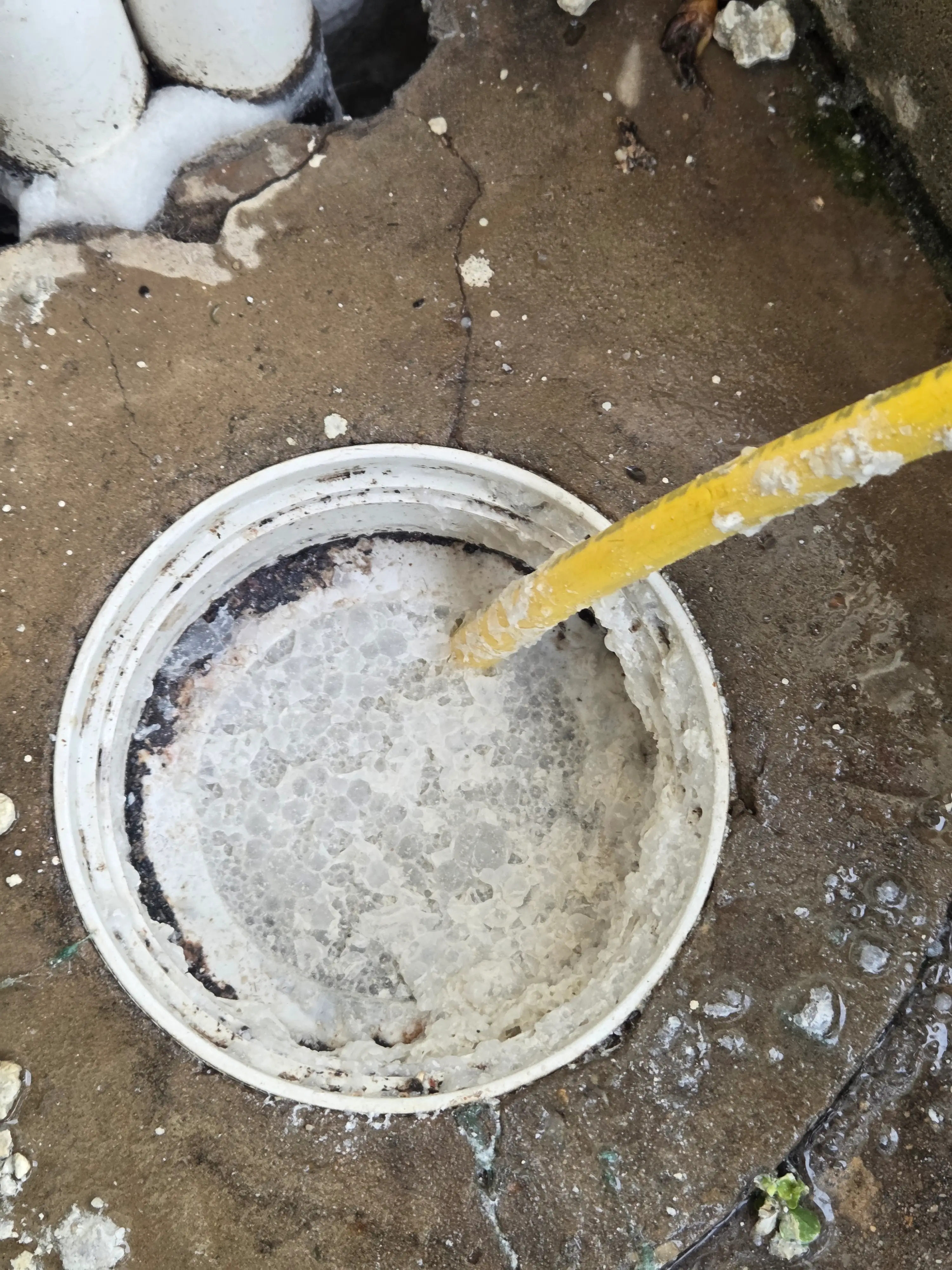
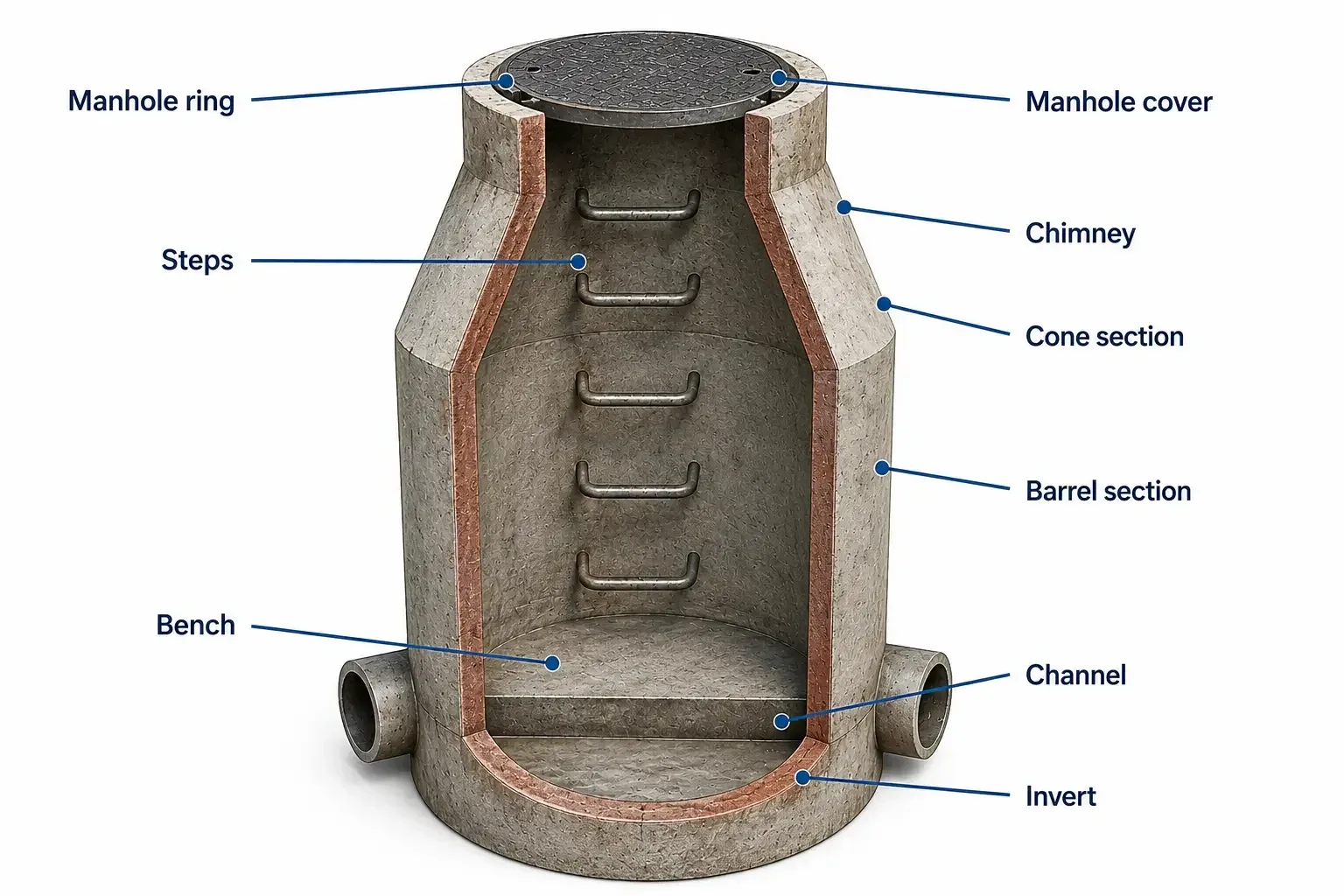
An inspection chamber is a vertical shaft that connects the ground surface to a drain below, giving a plumber direct access to the pipe. It is typically located where several drains meet, where a drain changes direction, or at regular intervals along a long run. From the chamber, a plumber can inspect the flow, clear a blockage with an eel or jetter, and insert a camera to survey the line in both directions.
Chambers range from small, shallow access pits on household drains to larger structures on bigger systems. On the public network, the largest access points are proper manholes deep enough to enter, but on a typical residential property the chamber is usually a compact shaft reached from the surface.
Chambers versus inspection openings
It helps to distinguish two kinds of access point, both introduced in the parts of a drainage system explained:
- Inspection opening (IO): a simple capped fitting on a pipe, often a screw cap at the surface or against a wall, giving direct entry to that one section of drain.
- Inspection chamber: a larger junction structure, usually where drains converge or turn, providing access to several connections at once.
Both exist for the same reason — to let the drain be cleaned and inspected without excavation.
Why access points matter
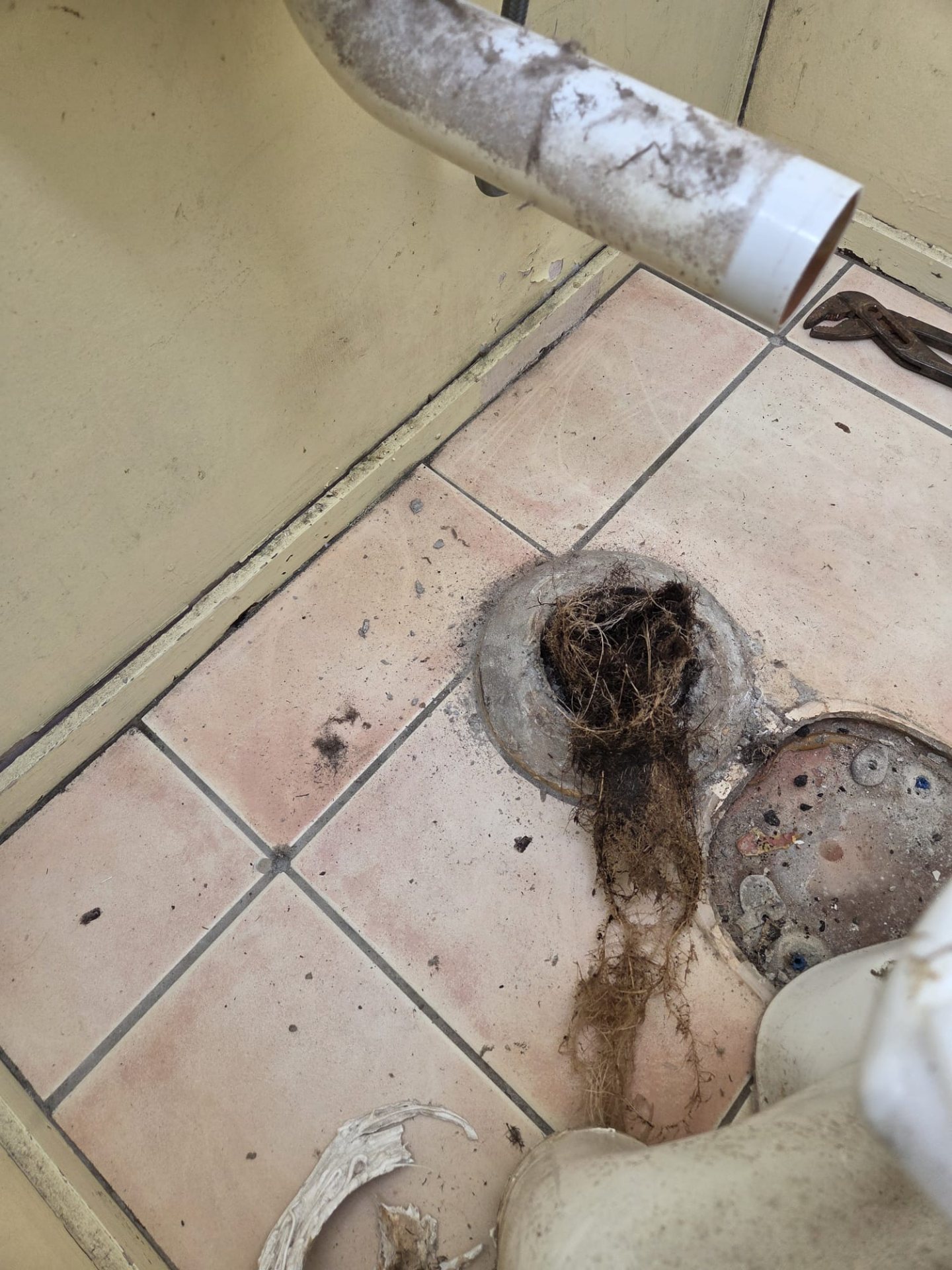
Underground drains inevitably need attention over their lifetime, whether from tree roots, a build-up of debris, or a section that has sagged or cracked. Access points make that work faster, cheaper and less disruptive:
- Clearing blockages: a plumber can insert an eel or high-pressure jetter directly at the chamber, close to the problem.
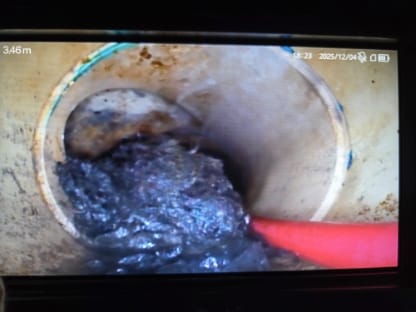
- Camera inspections: a camera fed from the chamber can survey the line and pinpoint faults.
- Locating problems: chambers act as reference points that make it easier to work out where along a drain an issue lies.
- Routine checks: lifting the lid gives a quick view of whether the drain is flowing freely.
An inspection chamber turns a buried, invisible drain into something a plumber can reach in minutes — often the difference between a quick clear and a dig.
Looking after your chamber
Because chambers are only useful if they can be found and opened, a little care goes a long way:
- Keep the lid accessible. Avoid building over, paving across, or permanently landscaping on top of a chamber.
- Know where it is. Note the location so it can be found quickly in an emergency.
- Keep the lid secure and intact. A damaged or missing lid is a safety hazard and lets debris and vermin into the drain.
- Do not use it as a rubbish point. A chamber is for access, not for tipping waste.
In Brisbane's storm-prone climate, keeping chambers clear also helps during heavy weather, when a quick check can reveal whether a drain is coping or surcharging.
The takeaway
An inspection chamber is a small feature with an outsized value: it is the doorway to your underground drains. Treating it as an asset — keeping it findable, accessible and in good repair — pays off every time the drain needs attention.
If you cannot locate your inspection chamber, or its lid needs replacing, a licensed plumber can help. Get in touch through the contact page or explore the available services.