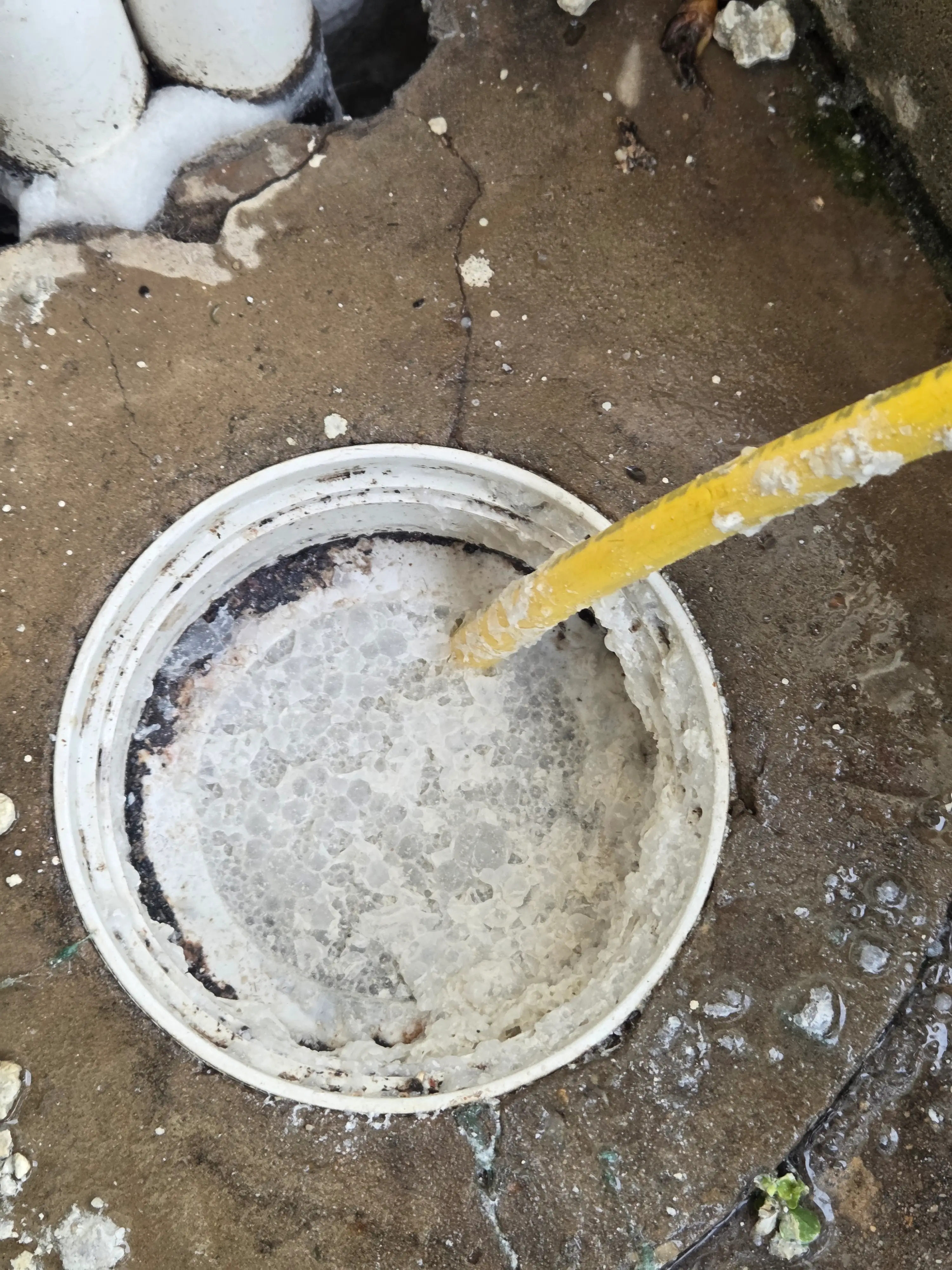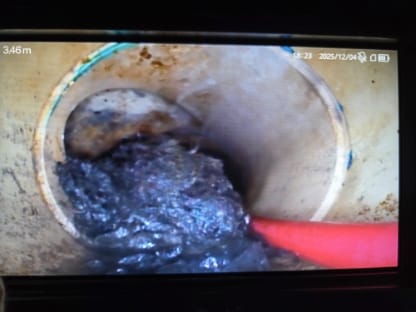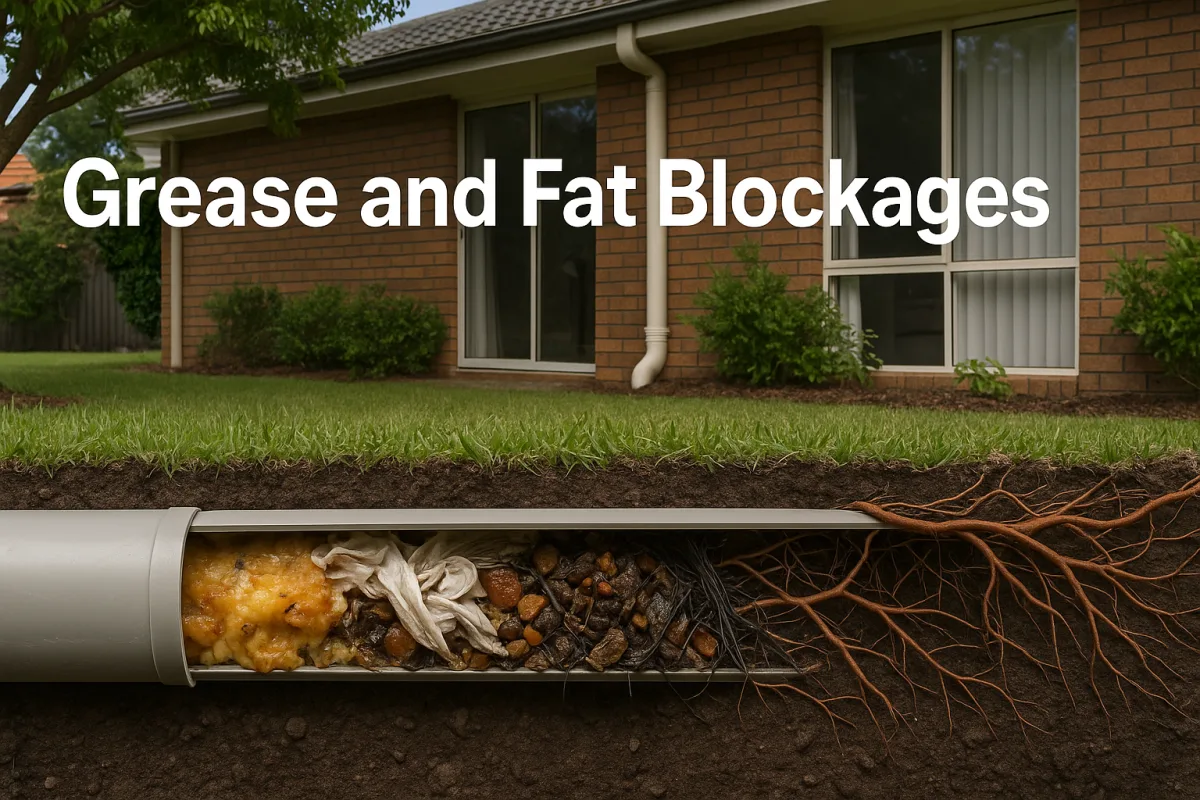
Fats, oils and grease — often shortened to FOG — are the single most common cause of blocked kitchen drains. The problem is deceptively simple. When you rinse a warm pan or pour off cooking oil, it flows easily down the plughole as a liquid. But that liquid does not stay liquid for long. As it moves along the cooler pipe, it loses heat, thickens and sticks to the pipe wall. Layer by layer, it builds into a hard, waxy deposit that narrows the pipe until water can barely pass.
How a grease blockage forms
The process happens in stages that most people never see:
- Warm fat is poured or rinsed down the sink as a free-flowing liquid.
- As it travels along the pipe, it cools and begins to solidify.
- It clings to the pipe wall, especially at bends, joints and rough spots.
- Each new pour adds another layer, and the deposit traps food scraps and other debris.
- Over weeks and months the bore shrinks until the drain runs slow, then blocks completely.
In commercial kitchens this same process forms large, hardened masses. At home the scale is smaller, but the mechanism is identical, and a home kitchen line can block surprisingly quickly if fat goes down it regularly.
Why hot water and detergent are not enough
A common belief is that flushing fat with hot water and a squirt of detergent washes it safely away. In reality this only delays the problem. The hot water may keep the fat liquid for the first metre or two, but as soon as it reaches cooler sections of pipe it solidifies again — often further down the line where it is much harder to reach. Detergent emulsifies fat temporarily, but the emulsion breaks down and the grease re-forms. You are not removing the fat; you are simply moving the blockage somewhere less convenient.
Pouring fat down the sink with hot water does not get rid of it. It just decides where, deeper in your pipes, the blockage will form.
Disposing of fats the right way
The best defence is to keep fat out of the drain entirely. It is easier than it sounds:
- Let it cool and bin it. Pour used oil and fat into an old jar or container, let it set, and put it in the general waste.
- Wipe greasy pans with a paper towel before washing, so most of the residue goes in the bin, not the sink.
- Scrape plates into the bin or compost before rinsing.
- Use a sink strainer to catch solids and congealed fat.
- Collect larger amounts of oil for appropriate disposal rather than tipping it down the drain.
Clearing a grease blockage
If your kitchen drain has already slowed, a few safe steps can help a mild case. Try a plunger to shift a partial clog, or carefully cleaning the sink trap (the U-bend under the sink), which often collects the first and worst of the grease. Avoid harsh chemical drain cleaners as a routine fix — they can damage pipes and often fail to clear a solid fat deposit. For a stubborn or recurring grease blockage, professional high-pressure jetting is the most effective way to scour the pipe wall clean, something a plunger cannot achieve.
Building good habits
Grease blockages are almost entirely preventable, which makes them one of the most rewarding causes to tackle. A household that never pours fat down the sink, wipes pans before washing and uses a strainer will rarely, if ever, deal with a grease clog. For a full picture of how kitchen drains block, see the lesson on the blocked kitchen sink.
If your kitchen drain keeps slowing despite your best efforts, there may be a build-up further down the line that needs professional clearing. You can reach out through the contact page to discuss the best approach.