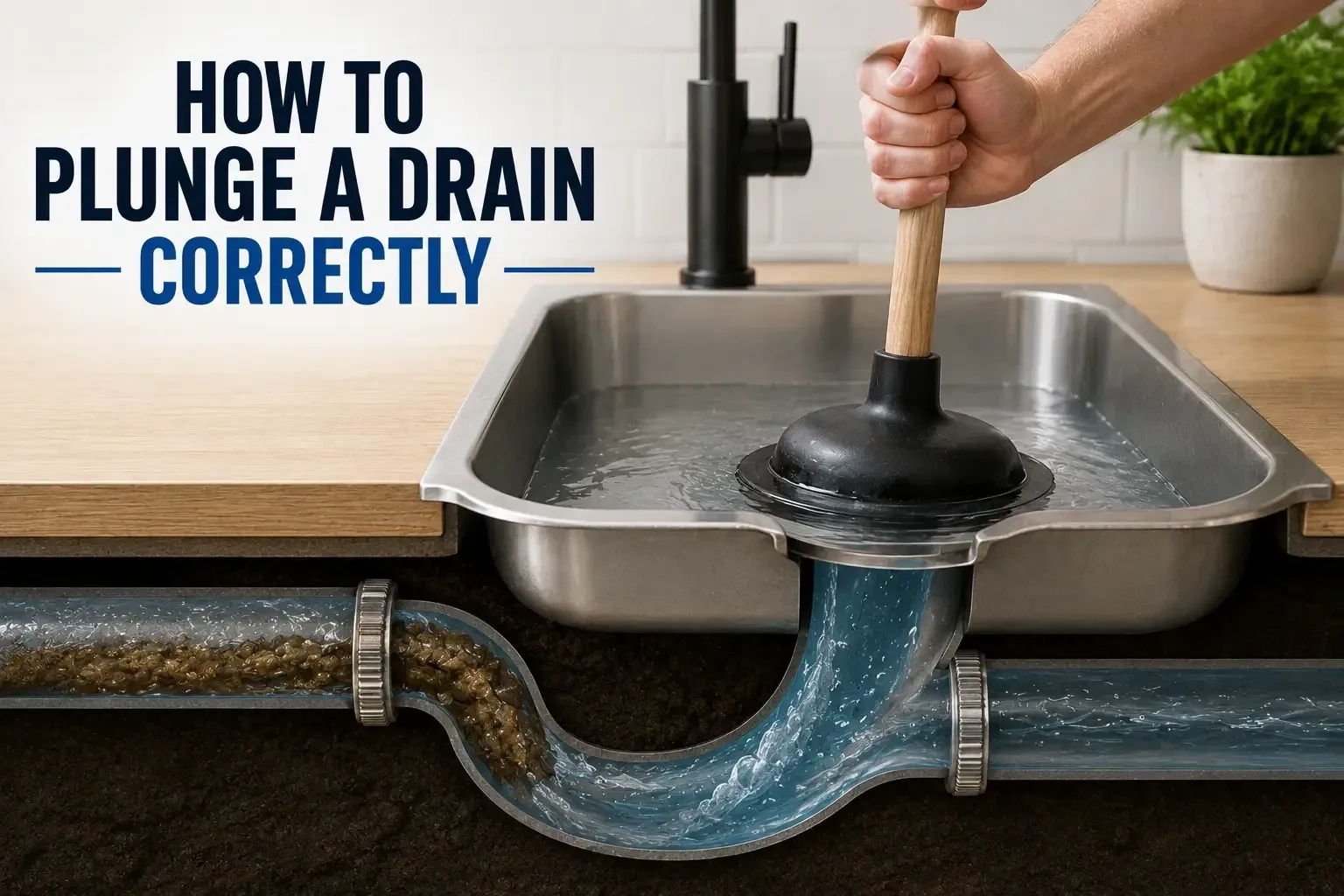
The humble plunger is the most effective first tool for a simple blockage, but most people use the wrong type or the wrong technique and give up too soon. Plunging works by creating pressure and suction that dislodge a soft clog and let it flow away. Done correctly, it clears many everyday blockages in a minute or two, with no chemicals and no call-out. Done poorly, it just splashes dirty water around.
Choose the right plunger
There are two common designs, and using the wrong one is why many people fail:
- Cup plunger — a simple rubber cup on a handle. It works best on flat surfaces like sinks, basins, baths and shower floor wastes.
- Flange plunger — has an extra soft rubber flap that folds out from the cup. The flange fits into the toilet bowl outlet to form a seal, making it the right choice for toilets.
A good seal is everything. Without it, you are just pushing air, not moving the blockage.
Prepare before you plunge
A little setup makes the job cleaner and more effective:
- Protect the area. Lay down old towels and wear gloves, as plunging can splash.
- Block the overflow. For sinks and basins, cover the small overflow hole near the top with a damp cloth so suction is not lost through it.
- Manage the water level. You want enough water to cover the plunger cup so it works on water, not air. Bail some out of an over-full toilet, or add a little to a dry sink.
- Isolate double sinks. Plug or hold a cloth over the second drain in a double kitchen sink so pressure is not lost.
The correct plunging technique
- Seat the plunger squarely over the drain so the rubber forms a complete seal against the surface.
- Push down slowly first to expel trapped air, then keep the seal intact.
- Pump firmly and steadily in and out — the pull is as important as the push, because suction lifts the clog loose.
- Keep a rhythm for around 15 to 20 seconds, then break the seal to check if the water drains.
- Repeat several cycles. Many blockages need a few rounds before they clear.
Never plunge a drain straight after pouring in a chemical drain cleaner. Splashback of caustic liquid can burn skin and eyes.
When plunging works and when it will not
Plunging is ideal for soft, local blockages — a build-up of food, grease, hair or paper close to the fixture. It is far less effective when:
- The blockage is a solid object lodged in the trap or pipe.
- The clog is deep in the main line, where a plunger cannot generate enough force.
- Multiple fixtures are affected, which points to a blocked sewer main rather than a local clog.
- Tree roots or a collapsed pipe are the real cause.
After you clear it
Once the water drains freely, flush the pipe with plenty of warm water to carry away loosened debris. Clean the plunger and store it dry. If plunging keeps working only briefly before the blockage returns, that is a sign of a deeper problem worth investigating rather than repeatedly clearing.
If a few honest attempts do not shift the blockage, stop before you make a mess and consider a next step such as using a drain snake safely or booking a professional. You can always reach a licensed plumber through the contact page.