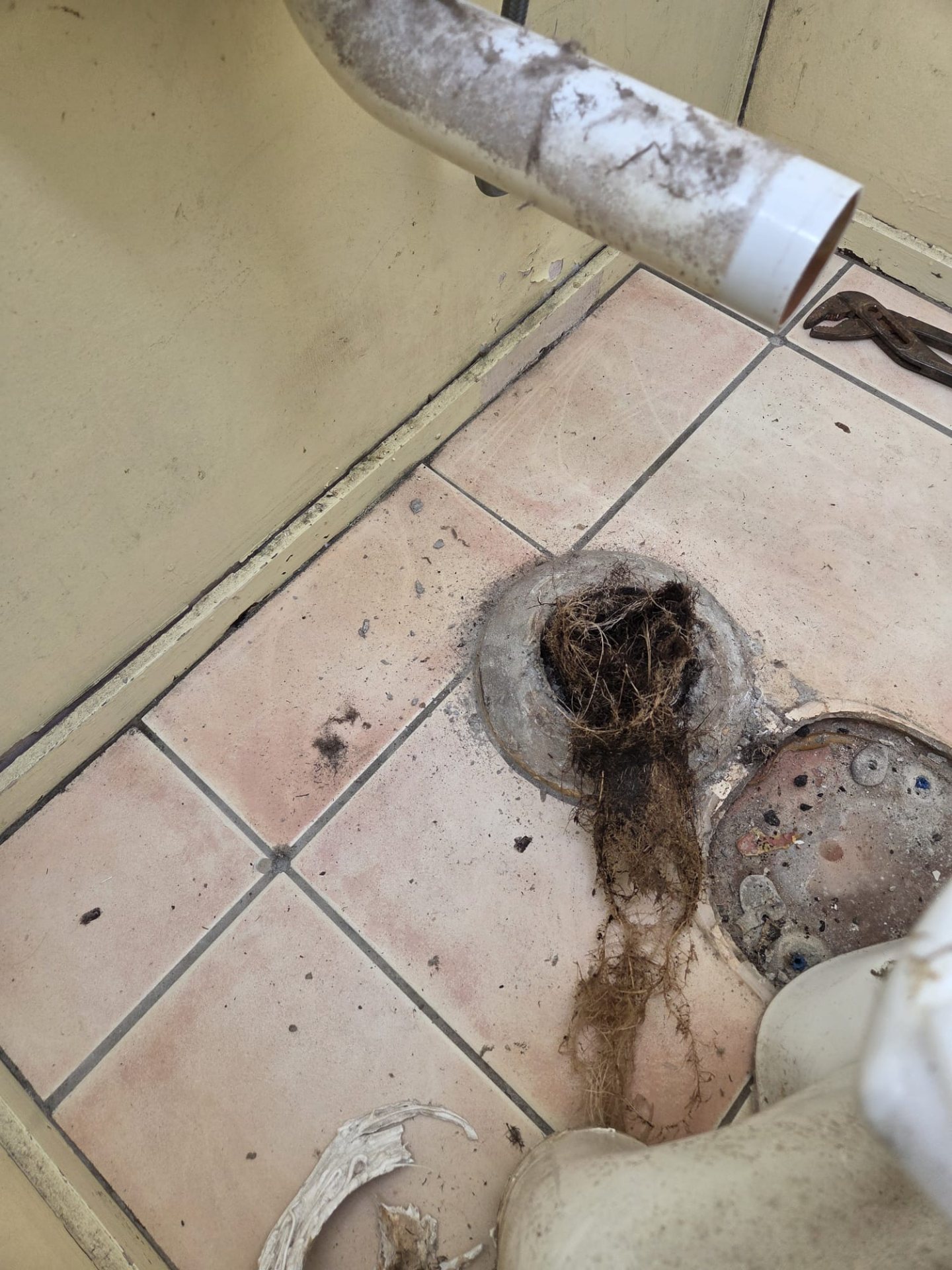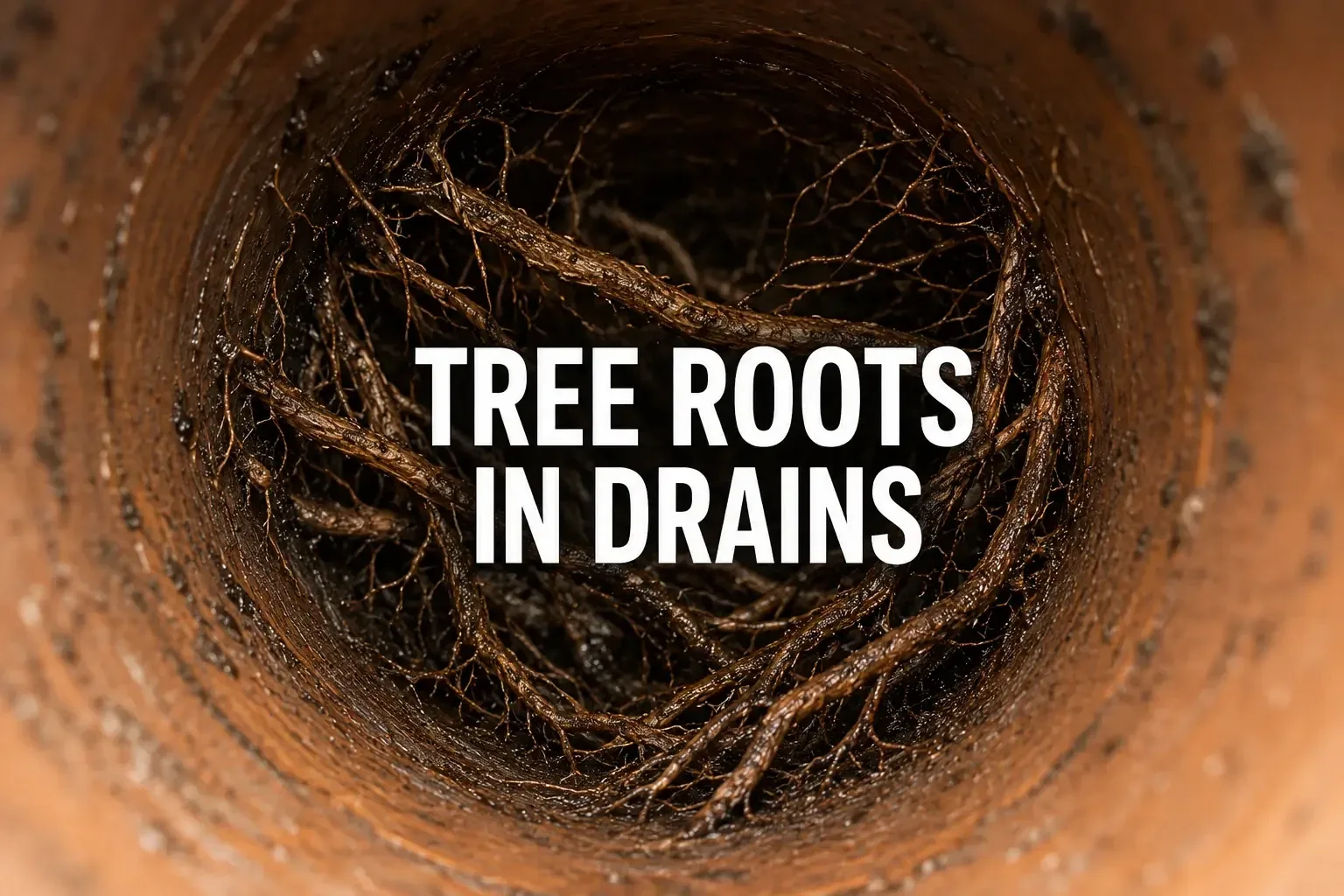
Tree roots are one of the most persistent and destructive causes of blocked drains in Brisbane. Established suburbs with mature trees, combined with older jointed pipes and reactive clay soils, create close to perfect conditions for roots to find and invade drainage lines. Once inside, roots grow into a dense fibrous mass that traps waste, restricts flow and, over time, can crack or collapse the pipe entirely. Understanding how it happens is the first step to dealing with it properly.
Why roots head for your drains
Roots grow towards two things: moisture and nutrients. A drainage pipe carries both. Even a perfectly sealed pipe releases a small amount of water vapour, and in dry Brisbane spells that vapour is a beacon for nearby roots. When a pipe has a hairline crack, a loose joint or a poorly sealed connection, the roots follow the moisture straight to the opening.
Once a fine root tip finds a gap, it pushes through, then thickens as it feeds on the nutrient-rich water inside. What began as a thread can become a rope, and eventually a plug of matted growth that behaves like a net, catching every bit of debris that flows past.
Which pipes are most at risk
Not all pipes are equally vulnerable. The main risk factors are:
- Older earthenware (vitrified clay) pipes laid in rubber-ring or mortar joints, common in established Brisbane homes, which offer many entry points.
- Pipes with existing cracks or displaced joints caused by ground movement.
- Shallow drains that sit within reach of surface-feeding roots.
- Lines running close to large, thirsty trees or fast-growing species with aggressive root systems.
Modern, properly jointed PVC lines are far more resistant, but even they can be invaded where a joint has failed or the pipe has been damaged.
Signs of root intrusion
Root problems often develop slowly, so the early signs are easy to miss:
- Drains that are slow across several fixtures, especially toilets.
- Gurgling from the toilet or the lowest drain in the house.
- Blockages that keep returning weeks or months after being cleared.
- Recurring problems that seem worse after dry weather, when roots search hardest for moisture.
Because roots grow back, a blockage that returns on a regular cycle is one of the strongest indicators. If this sounds familiar, the early warning signs lesson can help you interpret what you are seeing.
Clearing roots without fixing how they got in is like mowing a lawn to kill it. The roots grow straight back through the same opening, usually within months.
Clearing roots
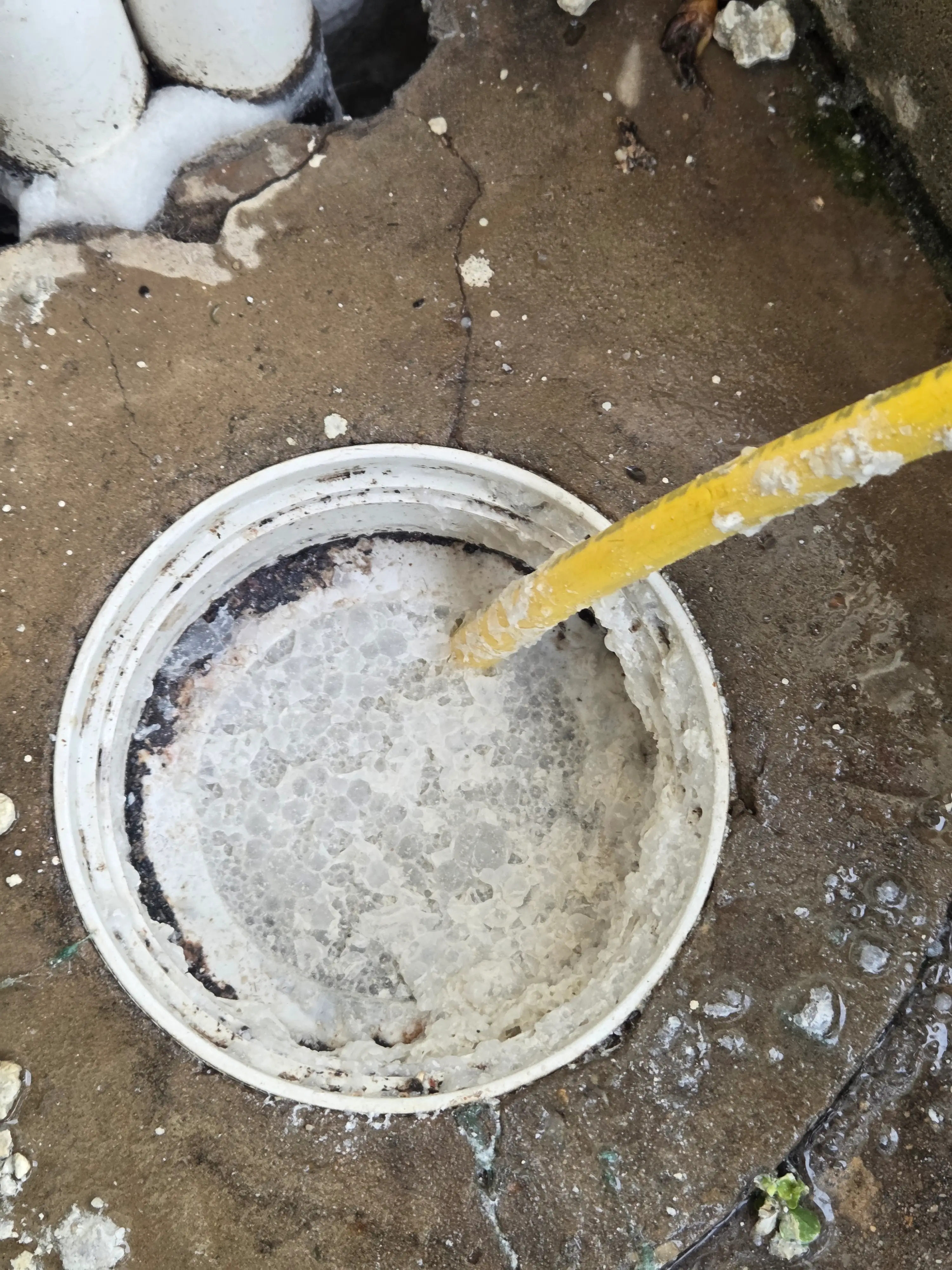
The first step is almost always to restore flow. Common professional methods include mechanical cutting with a rotating blade that shears the roots away from the pipe wall, and high-pressure water jetting, which uses a specialised nozzle to scour the line clean. Both restore the pipe's bore and remove the fibrous mass. However — and this is the crucial point — clearing alone does not stop the roots coming back, because the entry point remains.
Fixing it for good
A lasting solution has to address the opening the roots used. Depending on the pipe's condition, options may include:
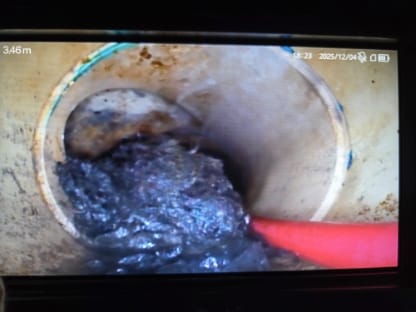
- Confirming the cause and location with a CCTV camera inspection, so the exact fault is known before any repair.
- Relining the pipe, where a new seamless liner is formed inside the old pipe, sealing cracks and joints without excavation.
- Excavating and replacing the damaged section where the pipe is too far gone to reline.
The right approach depends on the pipe material, the extent of the damage and access. A camera inspection is what turns guesswork into a clear plan. You can learn more about structural damage in the collapsed and cracked pipes lesson.
Reducing the risk
You cannot always move a tree, but you can reduce risk: avoid planting large or thirsty species near known drain routes, keep an eye on lines that have blocked before, and act on early signs rather than waiting. Regular inspection of a known problem line is far cheaper than an emergency dig.
If your drains block on a recurring cycle, roots are a likely suspect and worth investigating properly. Explore the services available or get in touch through the contact page to find the cause and plan a permanent fix.