High-pressure water jetting, often called hydro-jetting, is one of the most effective professional methods for clearing and cleaning drains. Instead of chemicals or a cutting cable, it uses water — but water delivered at very high pressure through a specialised nozzle. Done by a trained operator, it can scour a pipe back to near its original bore, clearing not just the blockage but the build-up that caused it.
How hydro-jetting works
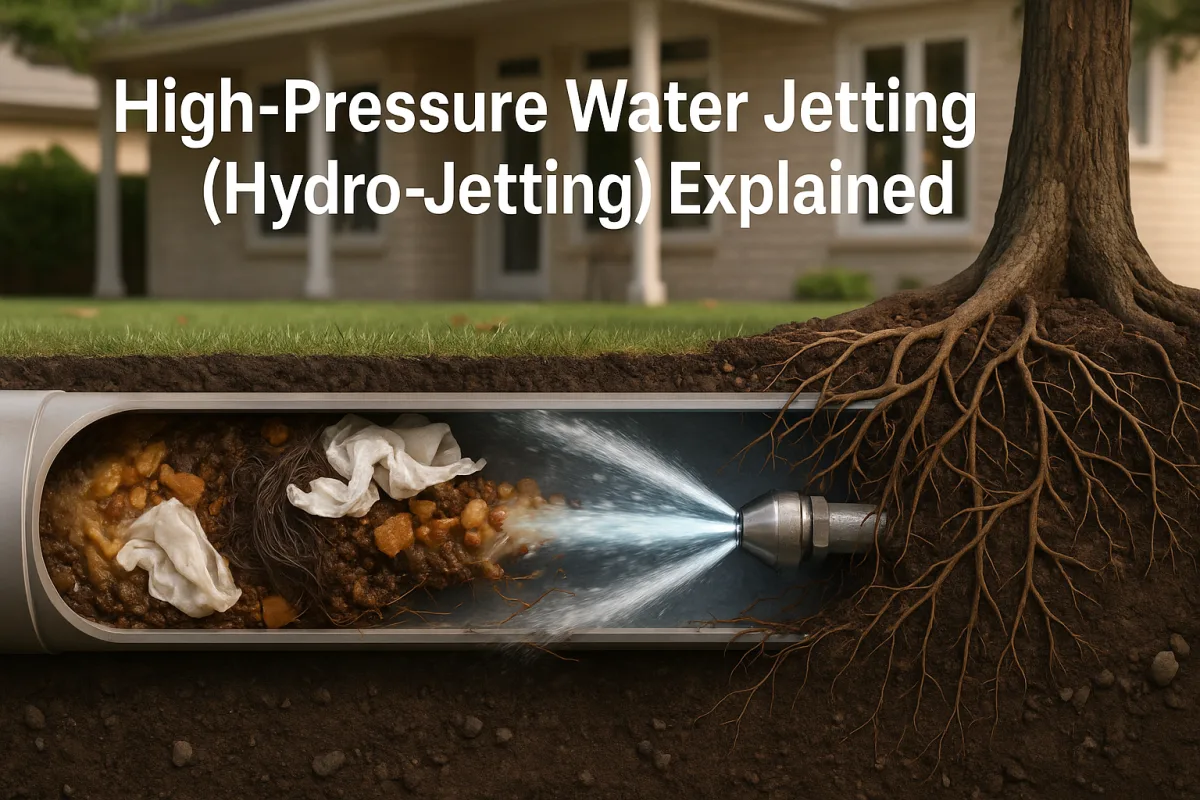
A jetting machine pumps water to high pressure and sends it down a hose fitted with a specially designed nozzle. The nozzle directs some jets forward to cut into the blockage and others backwards. Those rear-facing jets do two jobs: they propel the hose along the pipe, and they flush debris back towards the access point. The result is a pipe that is not just unblocked but genuinely cleaned along its walls.
- Forward jets break apart the blockage.
- Reverse jets pull the hose forward and wash loosened material back out.
- Different nozzles suit different jobs — from cutting roots to descaling and general cleaning.
What jetting can clear
Water jetting is versatile and handles many problems that defeat a plunger, a hand snake or chemicals:
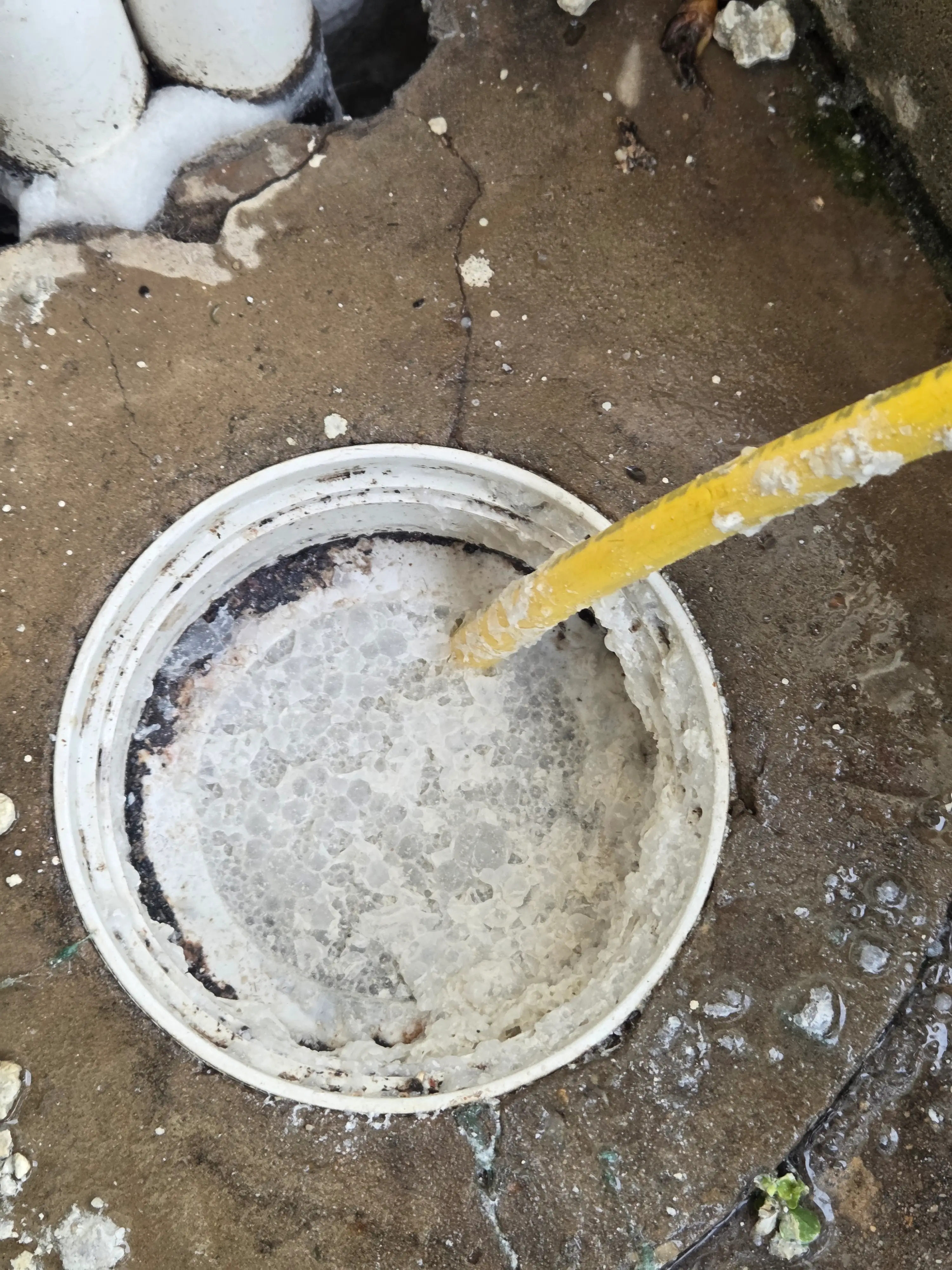
- Grease and fat build-up coating the pipe walls in kitchen lines.
- Sludge, silt and sediment that has accumulated over years.
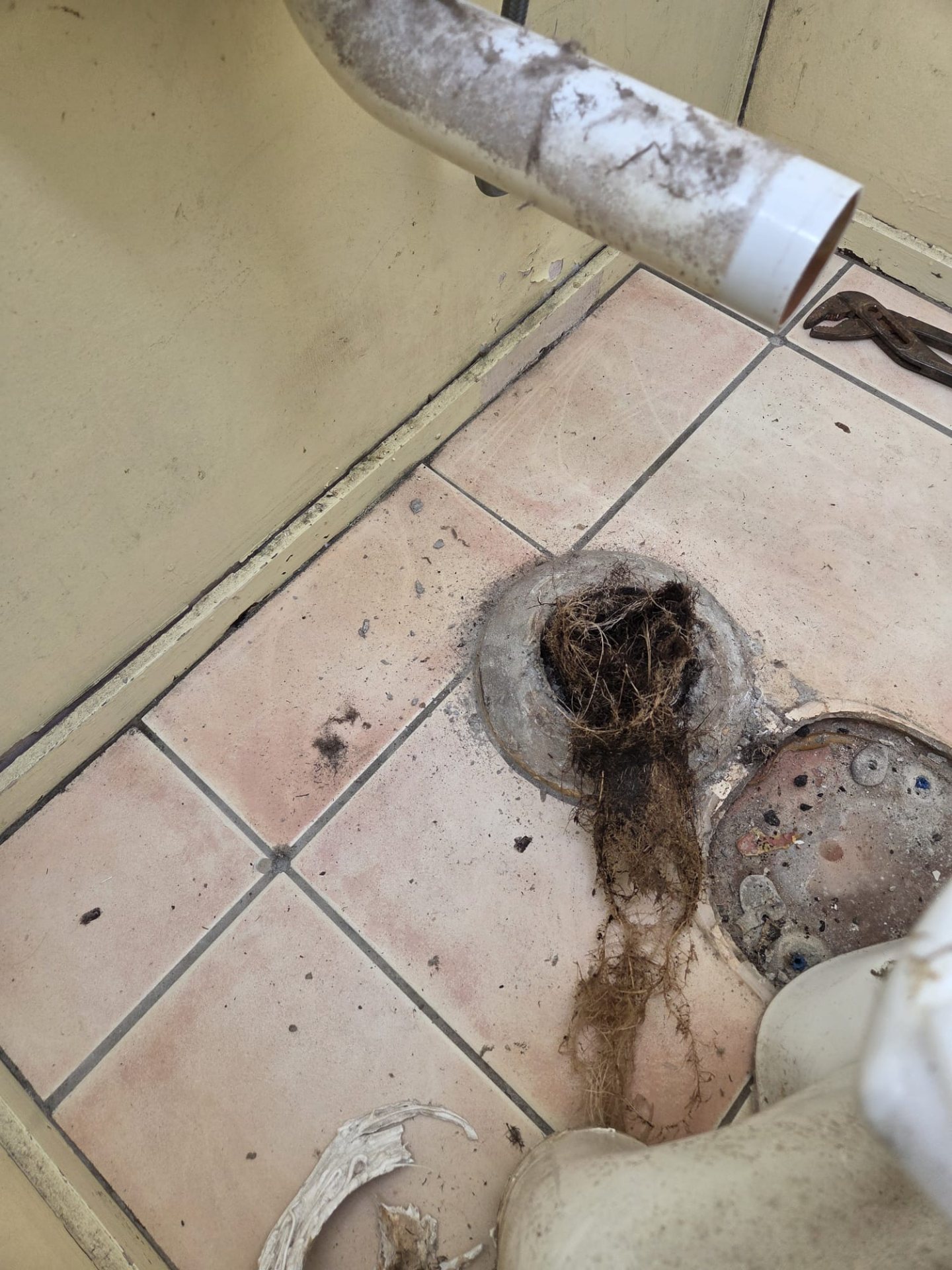
- Fine tree roots, which the right nozzle can cut and flush away.
- Scale and mineral build-up narrowing the pipe.
- General debris in stormwater and sewer lines.
Because it cleans the whole pipe surface rather than just punching a hole through a clog, jetting often gives a longer-lasting result than snaking alone.
What jetting cannot do
Jetting is powerful, but it is not a cure-all:
- It cannot repair a collapsed or badly cracked pipe — that needs relining or replacement.
- Very large, woody root masses may need mechanical cutting first.
- On old, fragile or already-damaged pipes, high pressure must be used with care and correct settings to avoid causing harm.
Water jetting is a job for trained operators. The pressures involved are high enough to cause serious injury, which is why it is not a home DIY method.
Why a camera inspection should come first
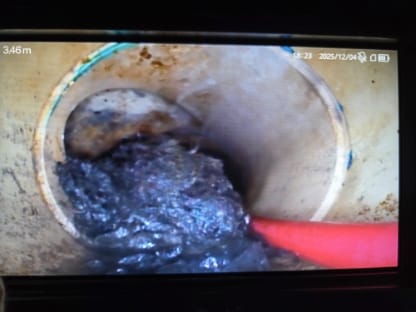
Good practice is to inspect before jetting. A camera shows the cause and condition of the pipe, so the operator can confirm jetting is appropriate and choose the right nozzle and pressure. Jetting a pipe that is actually collapsed, for example, wastes time and can worsen the damage. Inspecting again afterwards confirms the pipe is clean and reveals any underlying faults the blockage was hiding. Learn more about the value of looking first in the CCTV Drain Inspections series.
Jetting versus snaking
| Aspect | Drain snake | Hydro-jetting |
|---|---|---|
| Main action | Bores or hooks a hole through the clog | Scours the full pipe wall clean |
| Grease removal | Limited | Very effective |
| Longevity | Often shorter — residue remains | Often longer — pipe cleaned |
| Best for | Localised solid clogs, quick clears | Grease, scale, sludge, fine roots |
The two methods are complementary rather than competing — a snake is quick for a localised clog, while jetting restores flow across a whole line. For a recurring or severe blockage, a professional can advise which is right. Explore the full range of drainage services or start a conversation via the contact page.