A blocked toilet is one of the most stressful household plumbing problems, and one of the most common. The good news is that many blocked toilets can be cleared safely at home, and understanding the cause helps you both fix the current problem and avoid the next one. This lesson covers what blocks toilets, how to clear one without making a mess, and — importantly — how to tell when the problem is bigger than the toilet itself.
What blocks a toilet
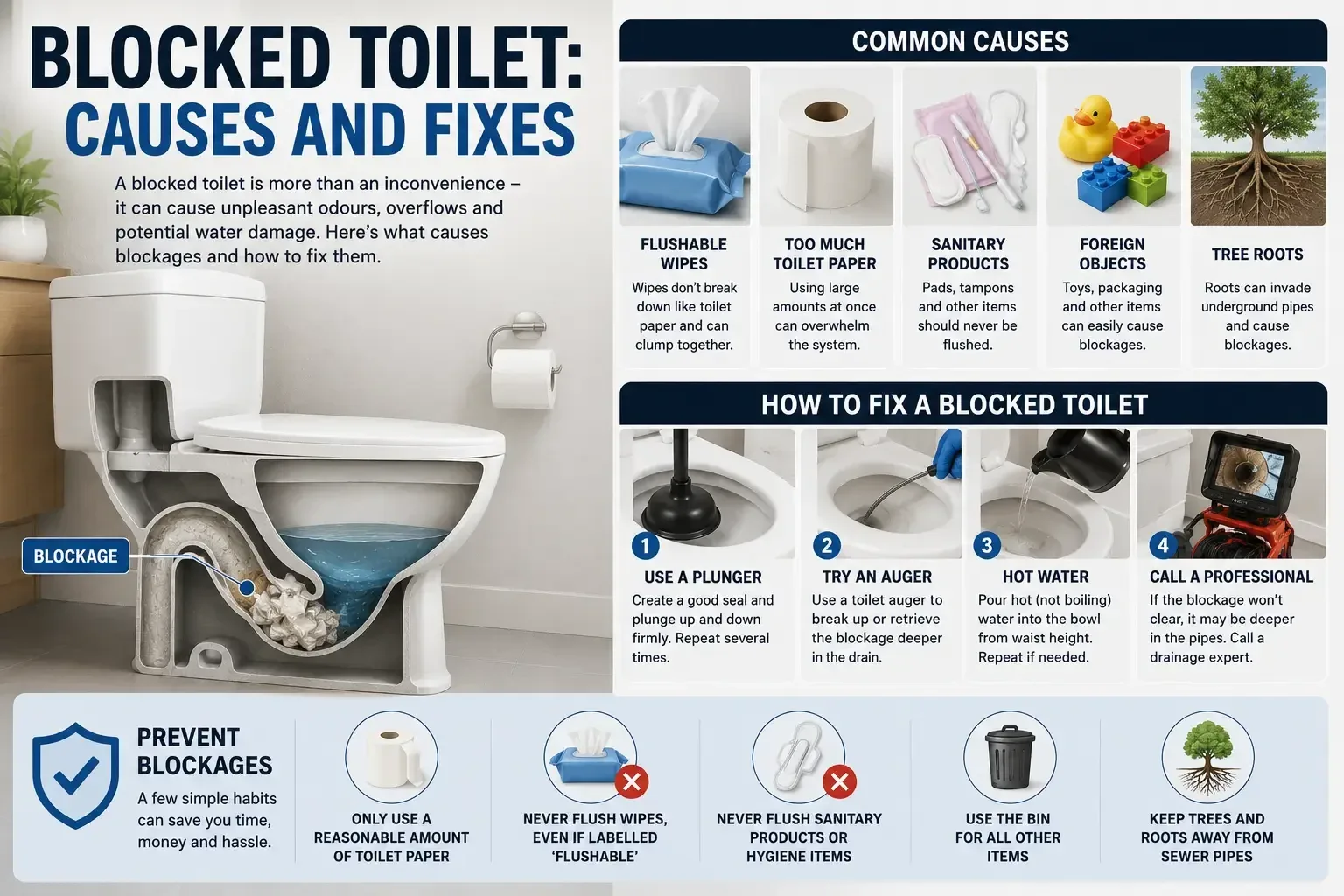
Toilets are designed to carry away only three things: human waste and toilet paper. Almost every blockage comes from something else, or from too much of the right thing:
- Too much toilet paper flushed in one large wad.
- "Flushable" wipes, sanitary items and nappies that do not break down.
- Cotton buds, cotton pads and other bathroom items.
- Foreign objects such as children's toys — a very common cause of a completely blocked bowl.
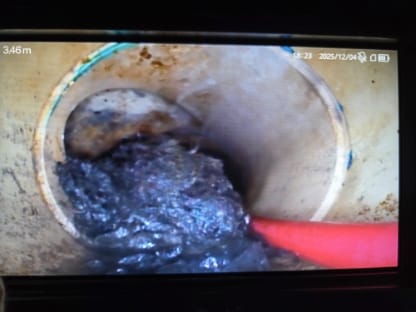
- A partial blockage further down the line, where the toilet is simply the first place it shows.
For more on what should never be flushed, see the foreign objects and wipes lesson.
Stop flushing first
The single most important thing to do with a blocked toilet is to stop flushing. If the bowl is already full or draining slowly, another flush can cause an overflow — the worst possible outcome. Instead, let the water level settle, and if the bowl is very full, wait for it to drop a little before you start work. This one habit prevents most blocked-toilet disasters.
When a toilet will not clear, resist the urge to flush again "just to check". A second flush is what turns a blockage into an overflow across the floor.
Clearing a blocked toilet, step by step
For a typical soft blockage, work through these steps:
- Protect the area. Lay down old towels or newspaper and put on gloves.
- Try a flange plunger. Use a toilet plunger (the type with an extended rubber flange), seal it over the outlet, and plunge firmly but steadily. The push-and-pull action shifts most soft blockages.
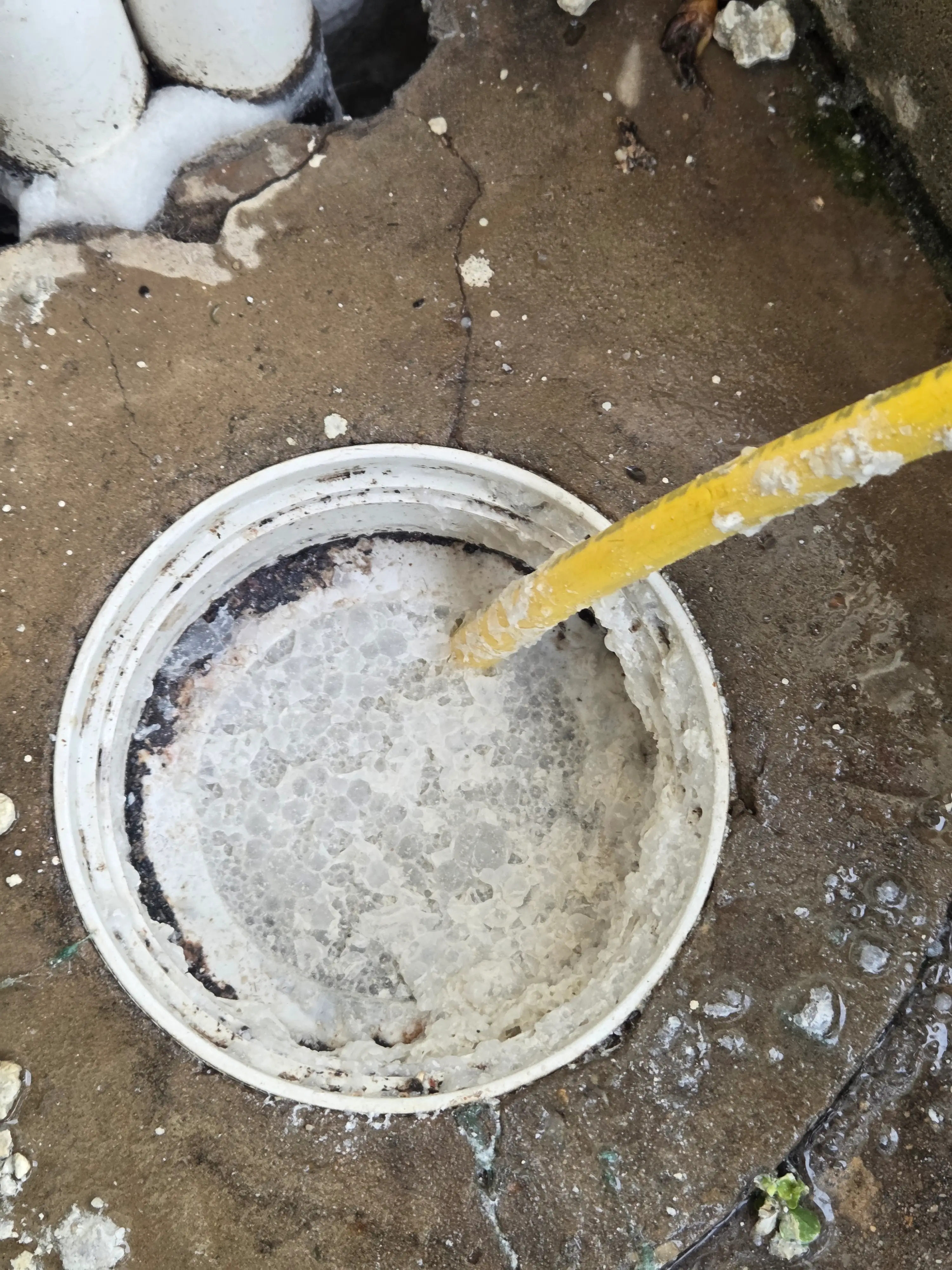
- Add hot water and dishwashing liquid. For a greasy or paper blockage, a bucket of hot (not boiling) water with a little detergent, poured from waist height, can help break it up. Let it sit for a few minutes.
- Use a toilet auger. If plunging fails, a toilet auger (closet auger) reaches into the trap to break up or retrieve the blockage.
- Know when to stop. If none of this works, or if a hard object is stuck, stop and call a professional rather than risk damaging the toilet.
Avoid caustic drain cleaners in toilets — they are often ineffective against paper and object blockages and can splash dangerously.
When it is not the toilet
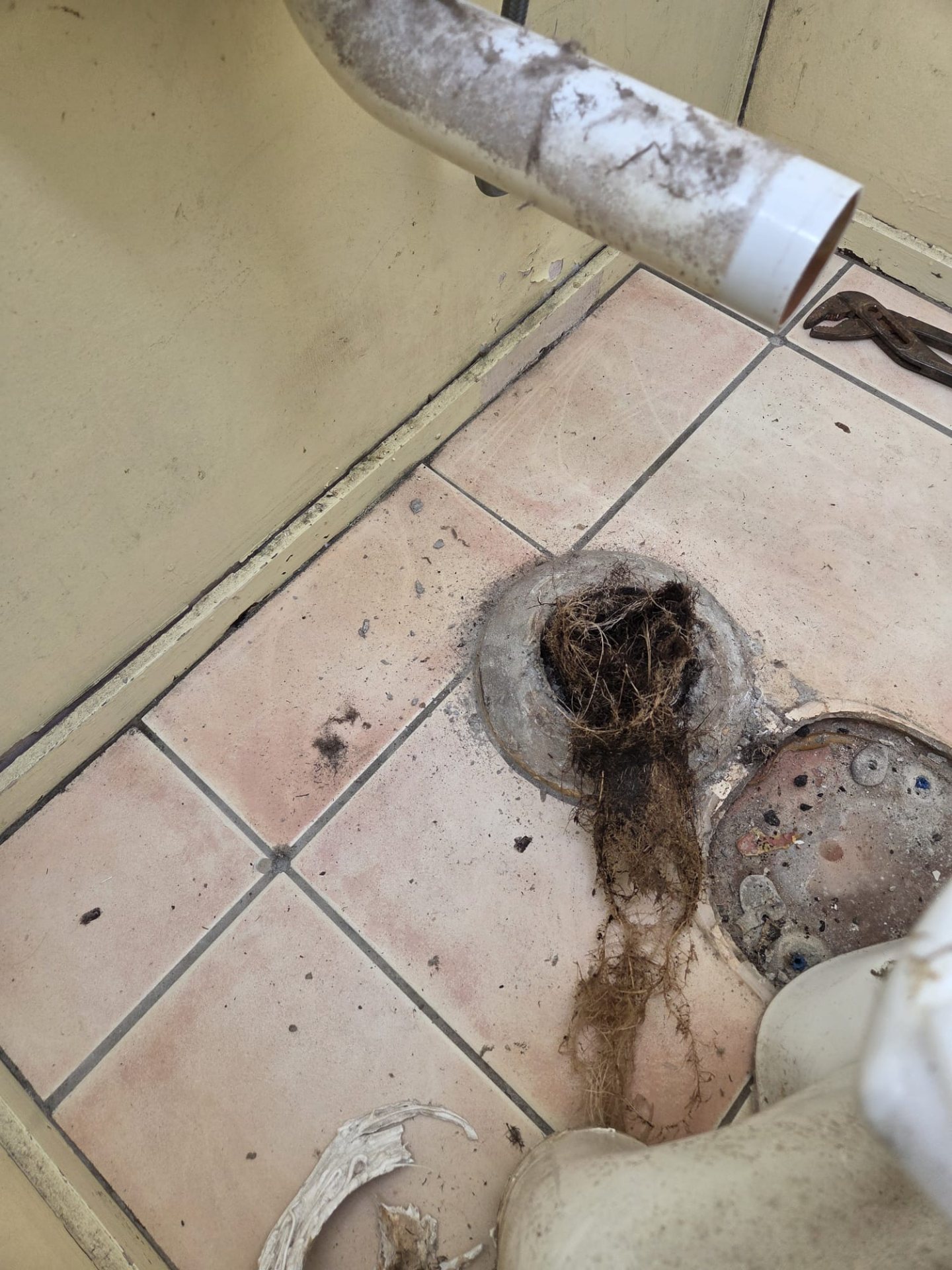
Sometimes the toilet is just the messenger. If the toilet blocks or gurgles at the same time as other fixtures drain, or if water rises at a floor waste or in the shower when you flush, the blockage is likely in the main line rather than the toilet. This pattern points to causes such as tree roots or a structural fault further down. Read the early warning signs lesson to interpret these clues.
Preventing future blockages
Most toilet blockages are avoidable with a few habits:
- Flush only the three Ps — pee, poo and toilet paper.
- Keep a bin in the bathroom for wipes, sanitary items and cotton buds.
- Use a reasonable amount of paper, and flush twice for larger loads rather than one big wad.
- Keep the lid down around young children to stop objects going in.
If your toilet blocks repeatedly, or you suspect the problem is in the main line, it is worth having it properly investigated rather than clearing it again and again. Get in touch through the contact page to discuss the best approach.